Proudly serving Phoenix, Scottsdale, Mesa, Glendale, Chandler, Gilbert & surrounding areasCall or Text 24/7: 602-464-4613
Aerial drone view of a residential neighborhood with Saguaro cacti and mountain silhouettes in Phoenix, AZ.

Sliding Window Installation and Replacement Services in Phoenix, AZ

Phoenix Window Co. installs and replaces sliding windows for homes and commercial properties in Phoenix and throughout the Salt River Valley. Our work covers energy-efficient sliding windows, vinyl and thermally broken aluminum frames, custom units, sliding patio doors, window repair, and glass replacement. We also install casement and awning windows, picture windows, bay and bow windows, and commercial windows when a property needs a broader window package. Each recommendation is matched to the opening, exposure, and way the space is used.

Phoenix summers regularly push pavement-level temperatures above 115°F, while west-facing glass absorbs solar heat gain from May through September. UV exposure, heat cycling, monsoon pressure, and dust can accelerate frame warping, seal failure, and rough operation. Our crews follow International Energy Conservation Code requirements and City of Phoenix permitting standards, and they specify National Fenestration Rating Council-rated glass so U-factor and solar heat gain coefficient are clear before installation. A measured site assessment and written estimate help identify the right frame, glass package, and installation approach for each opening.

Choose from vinyl, aluminum, or fiberglass-reinforced frames with Low-E, tempered, or tinted glass configurations suited to Sonoran Desert exposure. Request a free estimate to have the property and window openings reviewed before discussing final numbers.

Phoenix Window Co. provides sliding window installation and replacement across Phoenix, Scottsdale, Tempe, Mesa, Glendale, and the greater Phoenix metropolitan area.

★ ★ ★ ★ ★4.9/5.0 Customer Rating · 21 Years of Window Experience · Thousands of Windows Installed · Licensed, Bonded & Insured · Serving Homes & Businesses

Sliding Window Options & Benefits

What Are Sliding Windows?

Sliding windows use one or more sashes that move horizontally along a track. Their compact operation requires no swing clearance, making them practical beside patios, walkways, counters, and other tight spaces.

In Phoenix's hot-dry IECC climate zone, a well-fitted slider can help manage dust infiltration, strong solar exposure, and the pressure changes created by monsoon wind gusts. Frame material, weatherstripping, glass coatings, and installation quality all affect long-term performance.

Phoenix has over 1.6 million residents within city limits and 5.19 million across the metro area, including extensive housing built during the 1970s through 1990s subdivision boom. Sliding windows can be installed as full-frame replacements, retrofit units in existing openings, or custom configurations for new construction.

Benefits of Sliding Windows

The right sliding window package combines easy operation with glass and frame choices designed for intense desert sun. These features help balance cooling performance, durability, maintenance, and architectural fit.

  • Low-E2 or Low-E3 coatings reflect infrared heat while allowing visible light through.
  • Dual-pane insulated glass with argon fill balances performance and cost for most Phoenix homes.
  • Orientation-specific SHGC selections account for west-facing heat and shaded north-facing openings.
  • Horizontal operation preserves clearance along patios and walkways while limiting dust entry when sealed correctly.
  • UV-stabilized vinyl resists corrosion, rust, repainting, and repeated desert heat cycling.
  • Multi-chambered frames trap dead air for added insulation during peak cooling months.
  • Replacing aging single-pane units with insulated Low-E windows can reduce first-year cooling costs by $300 to $600, with five-year savings often between $1,500 and $3,000; some homeowners report reductions of up to 30 percent after full replacement and proper sealing.
  • Frame colors, sightlines, grid patterns, and hardware can be matched to existing architecture.
Sliding Window Services

Sliding Window Services

From a single off-track sash to a custom multi-panel opening, service begins with the condition of the frame, glass, track, sill, and surrounding wall. The goal is to recommend repair, glass replacement, retrofit installation, or full replacement according to what the opening actually needs.

Sliding Window Installation

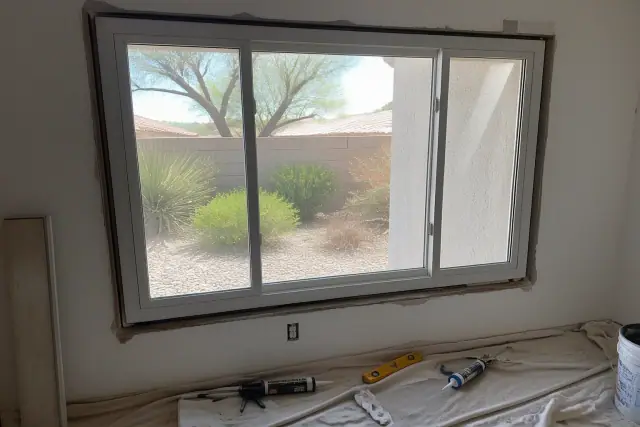
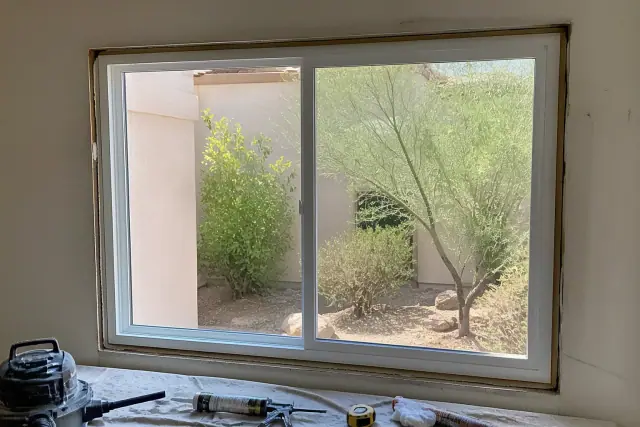
Sliding window installation in progress on a stucco home in Phoenix, AZ, with tools visible on a drop cloth.

Installations include measured full-frame replacements, retrofit units for suitable existing openings, and custom configurations for new construction. Each unit is squared, shimmed, fastened, sealed, and tested for smooth operation before the work is complete.

Request Estimate

Sliding Window Replacement

A window frame installation with tools and sealing materials at a job site in Phoenix, AZ.

Replacement is appropriate for warped frames, failed seals, sticking locks, persistent air leaks, or visible daylight around the opening. Single-pane windows older than 20 to 25 years are strong candidates for insulated Low-E dual-pane upgrades, and Phoenix installations typically range from $400 to $1,200 per window depending on size, frame material, glass package, removal, stucco work, and permitting.

Request Estimate

Sliding Window Repair

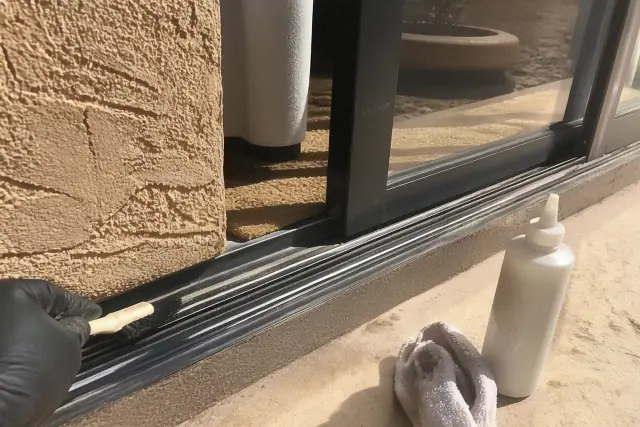
A contractor cleaning and lubricating a sliding window track on a sunny day in Phoenix, AZ.

Many sliding-window failures can be repaired without replacing the entire unit. Service may include resetting off-track rollers, replacing worn weatherstripping, realigning a shifted frame, or diagnosing a damaged roller assembly or balance system before recommending the most durable fix.

Request Estimate

Sliding Window Glass Replacement

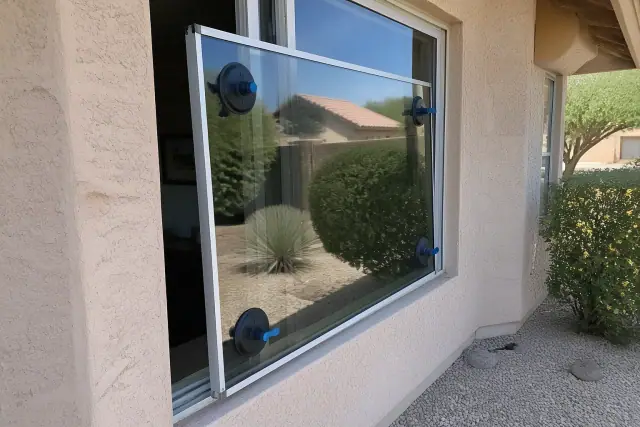
A new glass insert being installed in a sliding window frame at a home in Phoenix, AZ.

Cracked, fogged, or failed tempered glass can often be re-glazed when the frame remains sound. Glass-only replacement retains the existing unit while restoring a clear, sealed panel and can be more affordable than replacing the complete window.

Request Estimate

Custom Sliding Windows

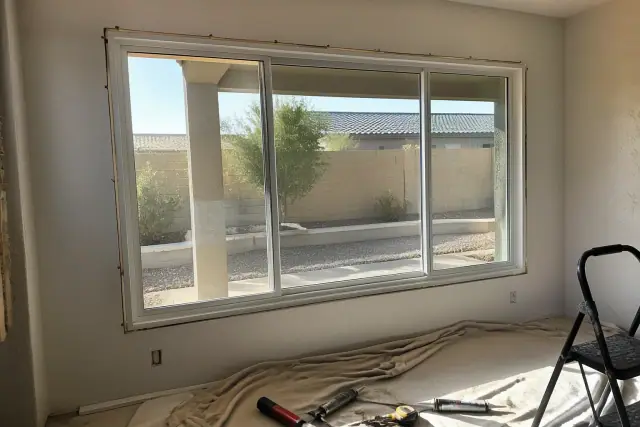
Custom sliding window frame installation in a Phoenix, AZ home with tools on a drop cloth.

Non-standard openings in older homes, custom builds, great rooms, converted patios, and commercial storefronts can be measured for exact fabrication. Frame material, glass package, grid pattern, sightlines, color, and hardware are coordinated with the opening and nearby windows.

Request Estimate

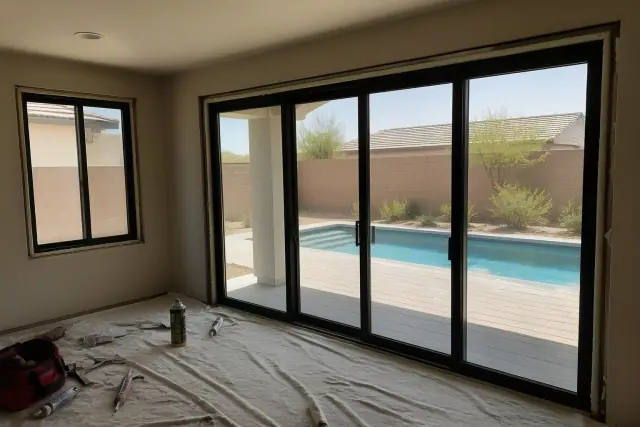
Sliding Patio and Multi-Slide Doors

Sliding patio door frame installation in a Phoenix, AZ home with tools and sealing materials on a drop cloth.

Two- and three-panel sliding glass doors, telescoping systems, bifold configurations, and pocket panels can connect indoor rooms to pools and covered patios. Multi-slide systems can open up to 90 percent of a wall, so structural headers, track loading, Low-E performance, and tempered glass selection are evaluated before a configuration is recommended.

Request Estimate
Sliding Window Options

Types of Sliding Window Options

Opening style and frame material shape ventilation, sightlines, maintenance, structural capacity, and cost. Compare how each option moves, where it fits, and which desert-performance details matter for the elevation.

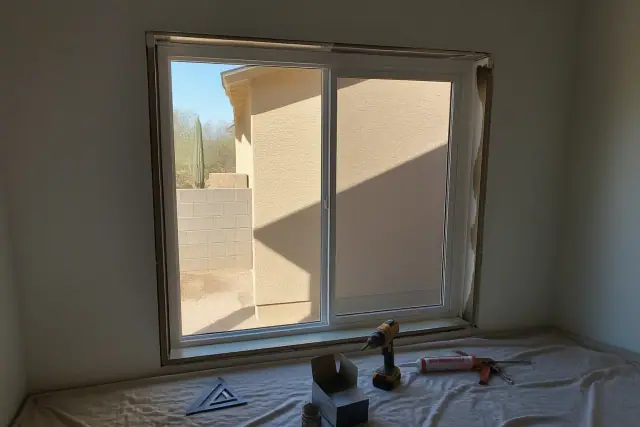
Single-slide window frame installation with tools on a drop cloth at a jobsite in Phoenix, AZ.

Single-Slide Windows

A single-slide window has one movable sash and one fixed sash. It is the most common and affordable configuration for standard residential openings.

  • One sash glides horizontally while the other remains fixed.
  • Well suited to common residential window openings.
  • Provides ventilation without projecting into a walkway or patio.
  • Available with insulated Low-E glass for desert heat control.
  • Can be ordered in vinyl or thermally broken aluminum frames.
Request Estimate
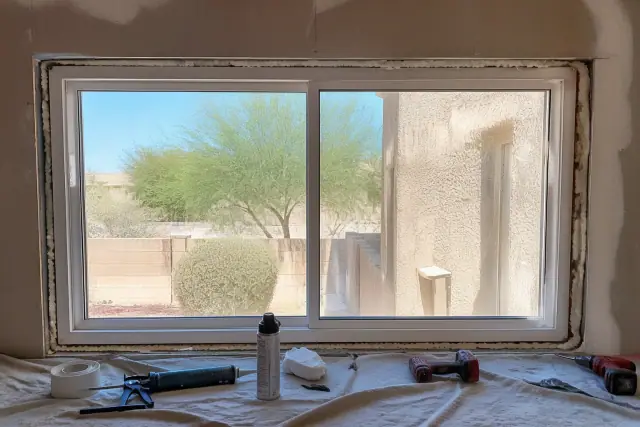
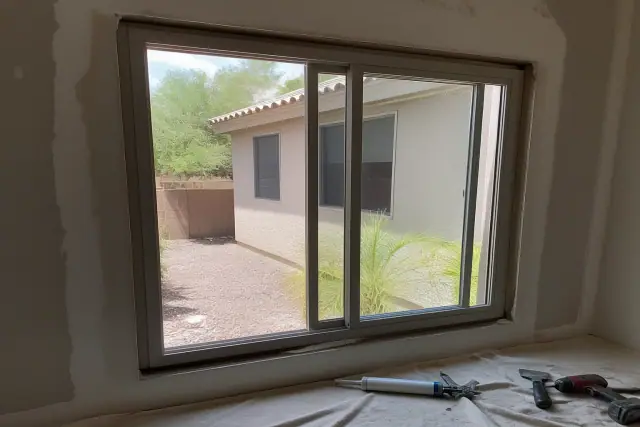
Double-slide window frame installation with tools on a drop cloth at a jobsite in Phoenix, AZ.

Double-Slide Windows

Double-slide windows let both sashes move independently along the track. Opening either side gives homeowners more ventilation flexibility than a single-slide unit.

  • Both sashes move independently for flexible airflow.
  • Horizontal travel keeps both panels within the window footprint.
  • Dual-pane Low-E glass with argon fill suits most Phoenix exposures.
  • Glass SHGC can be selected for each side of the home.
  • Frame finish, grid pattern, and hardware can match nearby windows.
Request Estimate
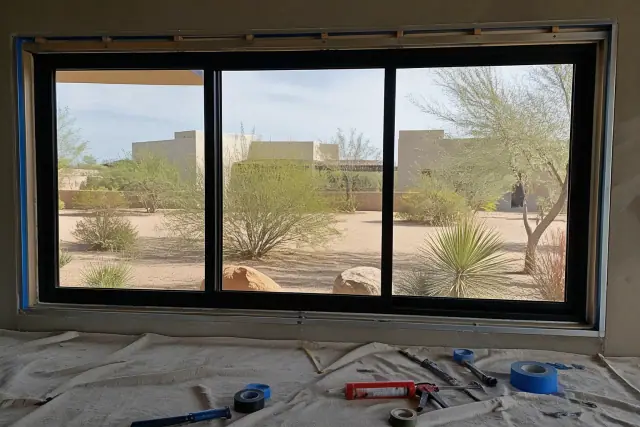
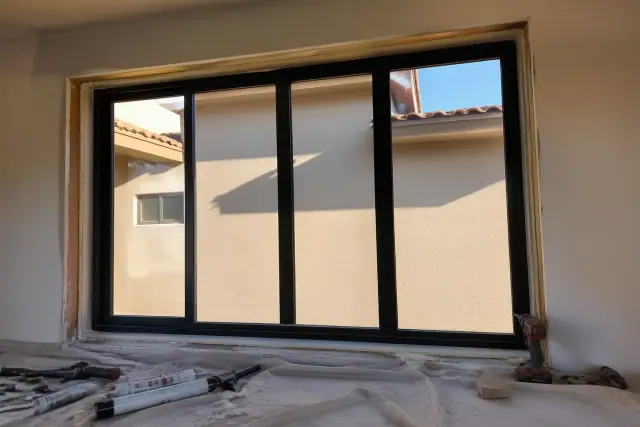
Installation of multi-panel sliding window frames at a residential construction site in Phoenix, AZ.

Multi-Panel and Pocket Sliders

Multi-panel systems use three or more panels that stack together or disappear into a wall pocket. They are designed for wider connections between living areas, patios, and backyards.

  • Three or more panels create a wider operable opening.
  • Stacking, telescoping, bifold, and pocket layouts support different wall conditions.
  • Multi-slide patio systems can open up to 90 percent of the wall.
  • Structural headers and track loading are reviewed for the panel weight.
  • Low-E and tempered glass support consistent performance across the large opening.
Request Estimate
Vinyl sliding window installation in progress on a stucco home in Phoenix, AZ, with tools visible on a drop cloth.

Vinyl Sliding Windows

Vinyl accounts for the majority of the company's Phoenix sliding-window installations because it combines insulation, UV resistance, and low maintenance. Properly installed vinyl units typically last 20 to 30 years in this climate with periodic track cleaning and weatherstripping checks.

  • UV-stabilized material resists chalking and brittleness.
  • Frames do not corrode, rust, or require repainting.
  • Multi-chamber construction traps air for added insulation.
  • Sandstone, bronze, desert tan, white, and woodgrain-look finishes coordinate with Phoenix homes.
  • Interior and exterior finishes can be selected separately for a coordinated low-maintenance design.
Request Estimate
Thermally broken aluminum window frame installation in a Phoenix, AZ stucco wall with tools on a drop cloth.

Thermally Broken Aluminum Windows

Thermally broken aluminum provides narrow sightlines and structural strength for large residential and commercial openings. A non-conductive polyurethane or polyamide strip separates the interior and exterior frame surfaces to reduce heat transfer compared with solid aluminum.

  • Narrow profiles maximize visible glass area.
  • Commercial-grade extrusions support large custom openings.
  • Higher wind-load and structural performance suit multi-panel configurations.
  • Thermal breaks reduce direct conduction through the metal frame.
  • The modern profile complements Arcadia, North Phoenix, and 1960s-era ranch architecture.
Request Estimate
Finding Your Right Fit

Choosing the Right Sliding Window Approach

The right choice depends on whether the existing frame is sound, how the sash needs to move, the size of the rough opening, and the amount of sun each elevation receives. Glass ratings, frame structure, sightlines, architecture, ventilation, sound control, and long-term maintenance are considered together rather than applying one specification to every window.

Glass Specifications by Orientation

NFRC-rated glass packages make U-factor and solar heat gain coefficient visible before installation. Every unit is specified with an Energy Star rating appropriate for the Southern climate zone, while west-facing, shaded, and north-facing openings receive glass choices suited to their different heat loads.

Measured Custom Fit

Laser measurements account for rough-opening tolerances, wall thickness, and stucco reveal before a window is ordered. Custom fabrication avoids forcing a standard unit into a non-standard opening and allows sightlines, grid patterns, color, and hardware to coordinate with the property.

Standards-Based Installation

Crews follow manufacturer fastening requirements, International Energy Conservation Code requirements, City of Phoenix permitting standards, and AAMA installation guidelines. Backer rod, high-UV low-VOC sealant, weatherstripping, caulk, and a final operation check help complete the weatherproofed opening.

What Sets Us Apart

Why Choose Phoenix Window Co. for Sliding Window Installation?

Projects begin with a measured property assessment and free written estimate, then move forward with frame, glass, and configuration details explained before ordering. The company is licensed under Arizona Registrar of Contractors requirements and pulls City of Phoenix permits when a job requires one.

Get a Free Estimate

Solar Heat Gain

West- and south-facing glass can absorb intense infrared radiation and continue radiating heat into a room after sunset. Low-E coatings and an orientation-specific SHGC help limit that solar load without blocking all visible light.

Failed Seals and Foggy Glass

Fog or haze between panes points to a failed insulated-glass seal. The frame and opening are inspected to determine whether re-glazing the panel is sufficient or whether a full replacement is the better long-term choice.

Sticking or Off-Track Sashes

A sash that drags, binds, will not lock, or leaves its track may have worn rollers, a damaged balance system, or a shifted frame. Diagnosing the actual failure point avoids replacing an otherwise serviceable window.

Warped Frames and Air Leaks

Repeated expansion and contraction can distort lower-grade frames, while a poorly fitted unit may leave visible daylight or gaps around the opening. Inspecting the frame, sill, rough opening, and surrounding stucco reveals whether repair, sealing, or replacement is appropriate.

Cracked Glass from Thermal Stress

Strong temperature changes can place stress on glass, especially in exposed openings. Cracked tempered panels can be replaced separately when the sash and frame remain structurally sound.

Worn Weatherstripping and Dust

Worn weatherstripping can admit hot air and fine desert dust even when the sash still moves properly. Replacing the strip, cleaning the track, realigning the frame, and checking the final seal can restore operation without changing the complete unit.

How it works

Our Sliding Window Process

Installation quality can determine whether a window performs for 20 years or begins failing within five. A deliberate six-step process checks the opening, protects surrounding finishes, follows the selected product requirements, and verifies the final seal and operation.

01.

Inspect the Existing Opening

The initial site assessment checks the existing frame, sill, surrounding wall, water intrusion, wood rot, and stucco cracking. These conditions are identified before removal exposes a larger issue.

02.

Measure and Select the Design

Laser measurements capture the rough opening, wall thickness, tolerances, and stucco reveal. Frame material, glass package, grid pattern, hardware finish, orientation, and configuration are then documented for ordering.

03.

Remove the Old Window Carefully

Old sashes and frames are removed in a sequence designed to protect interior drywall, exterior finish, stucco, and nearby landscaping. The opening remains controlled while concealed conditions are reviewed.

04.

Prepare the Frame and Barrier

The rough opening is checked for flashing and sill-pan issues, then prepared for the correct weather-resistant barrier. This step creates a sound surface before the new unit is set.

05.

Set, Fasten, and Seal the Unit

The window is shimmed, squared, and fastened to manufacturer specifications. Backer rod and low-VOC sealant rated for high-UV exposure are applied to close gaps against desert heat and dust.

06.

Test Operation and Weatherproofing

Final weatherstripping and caulking follow AAMA installation guidelines. Each slider is operated, locked, and checked for a tight seal before the job is considered complete.

Plan Your Window Project

Schedule a Sliding Window Consultation

Request a free written estimate for sliding-window installation, replacement, repair, glass replacement, or a custom opening. An on-site assessment provides the measurements and condition details needed to discuss the right frame, glass, and configuration.

Sliding Window Help

Sliding Window FAQs

Use these answers to compare sliding-window costs, materials, configurations, repair options, installation timing, and desert-performance details before requesting an on-site estimate.

Call Our Window Team

Installed sliding windows in the Phoenix market generally cost $400 to $1,200 per window. Size, frame material, glass package, old-window removal, stucco repair, and permit requirements can move the final price within that range. Phoenix Window Co. provides a free written estimate after measuring the opening on-site.

Vinyl-framed sliding windows with dual-pane Low-E glass and argon fill balance heat rejection and cost for most Phoenix homes. Thermally broken aluminum is a strong option when a larger structural opening or narrower sightline matters. West- and south-facing elevations usually benefit from a lower-SHGC glass package than shaded or north-facing openings.

A single-slide window has one moving sash and one fixed sash. A double-slide window lets both sashes move independently. Multi-panel or pocket sliders use three or more panels that stack or disappear into the wall for a wider opening.

Late fall through winter, roughly November through February, is typically the most affordable and available scheduling period for Phoenix window replacement. Demand and contractor backlogs tend to ease after extreme summer heat passes, creating shorter lead times and more scheduling flexibility than spring or early summer.

Many units can be repaired by resetting rollers, replacing weatherstripping, realigning the frame, or replacing cracked or fogged glass when the frame is sound. Warping, severe opening damage, persistent leaks, or a repair that will not hold may make full replacement the better long-term choice.

Properly installed vinyl sliding windows typically last 20 to 30 years in the Phoenix climate. Periodic track cleaning and weatherstripping checks are the main routine maintenance needs, while UV-stabilized material helps resist chalking and brittleness.

Double-pane insulated glass with argon fill remains the standard recommendation for most Phoenix homes because solar radiation drives much of the heat load. Triple-pane units provide a smaller benefit here than in cold climates, but they can make sense on unshaded west-facing walls or where sound dampening near I-10 or Loop 101 is a priority.

The choice depends on the condition of the existing frame, sill, rough opening, flashing, and surrounding stucco. A measured inspection identifies water intrusion, wood rot, cracking, and tolerance issues before a full-frame or retrofit approach is recommended.

Fog or haze between the panes is a sign that the insulated-glass seal has failed. If the sash and frame remain sound, replacing the glass panel may solve the problem without replacing the complete window.

Yes. Laser measurements can account for the exact rough opening, wall thickness, tolerances, and stucco reveal in older homes, custom builds, great rooms, converted patios, and storefronts. Frame material, glass, grid pattern, sightlines, color, and hardware can then be coordinated with the property.

Most residential sliding-window replacement projects take one to three days, depending on whether the work covers one room or the whole house. Work is sequenced so exterior openings can be covered and secured at the end of each day.

Large stacking, telescoping, bifold, and pocket systems place more weight on the opening, so structural header requirements and track loading should be reviewed first. Low-E and tempered glass specifications also matter because the glass area is large and exposed to Phoenix heat.

Crews follow manufacturer fastening instructions, International Energy Conservation Code requirements, City of Phoenix permitting standards, and AAMA installation guidelines. The process includes proper opening preparation, backer rod, low-VOC sealant rated for high-UV exposure, weatherstripping, caulking, and a final operation and seal check.