Proudly serving Phoenix, Scottsdale, Mesa, Glendale, Chandler, Gilbert & surrounding areasCall or Text 24/7: 602-464-4613
Aerial drone view of a residential neighborhood with Saguaro cacti and mountain silhouettes in Phoenix, AZ.

Residential and Commercial Window Replacement Services in Mesa, AZ

Phoenix Window Co. installs and services energy-efficient, vinyl, aluminum, custom, sliding, casement and awning, picture, bay and bow, residential, and commercial windows across Mesa. The company also handles targeted window repair and glass replacement when an existing frame remains sound. Each project is planned around frame material, glass package, opening style, and the property's exposure rather than a generic national specification. Homeowners and business owners receive recommendations matched to their structure and budget.

Mesa summers push past 110 degrees for weeks at a time, while radiant heat from asphalt and stucco lingers after sunset. Aging single-pane and dual-pane windows can admit that heat, make the HVAC system work harder, and create uneven room temperatures. Western exposure, low humidity, wide daily temperature swings, and monsoon dust also challenge glass coatings, seals, frames, and hardware. An in-person free estimate identifies the openings, exposure, and property conditions that should guide the project.

With a population above 504,000, Mesa is Arizona's third-largest city, and its window needs span 1960s ranch homes near Downtown Mesa through new construction in Eastmark. Phoenix Window Co. evaluates each rough opening, surrounding stucco or framing, and the sun exposure on every elevation before recommending a product.

★ ★ ★ ★ ★4.9/5.0 Customer Rating - 21 Years of Window Experience - Thousands of Windows Installed - Licensed, Bonded & Insured - Serving Homes & Businesses
Mesa Window Services

Window Services for Mesa, AZ

Choose from replacement windows, frame materials, opening styles, custom configurations, targeted repairs, glass replacement, and commercial products suited to Mesa properties. These same window categories are also available through the company's Glendale, AZ service area, with product selection adjusted to each property's openings and exposure.

Energy-Efficient Windows

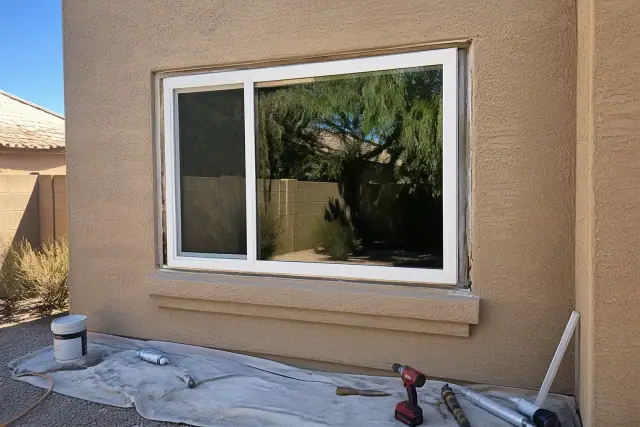
Energy-efficient window installation in progress at a residential worksite in Mesa, AZ.

Replace single-pane or worn dual-pane units with full-frame or insert windows selected for Arizona's climate zone. Careful rough-opening measurements, seal restoration, and a modern glass package help control heat gain and air leakage.

Explore Service

Vinyl Windows

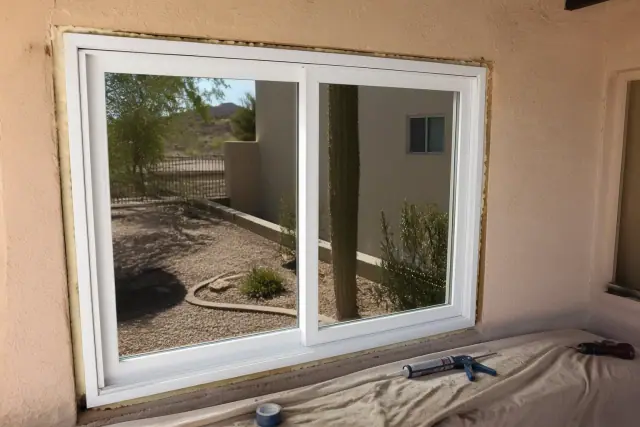
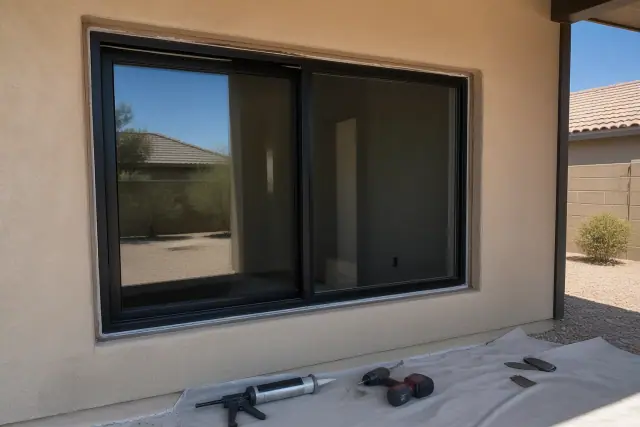
New vinyl window installation in a stucco home in Mesa, AZ, with tools on a drop cloth.

Multi-chambered vinyl frames add insulating dead-air space and resist the year-round UV load without the maintenance associated with painted wood. They are the most requested frame material across the East Valley for their cost-to-performance balance.

Explore Service

Aluminum Windows

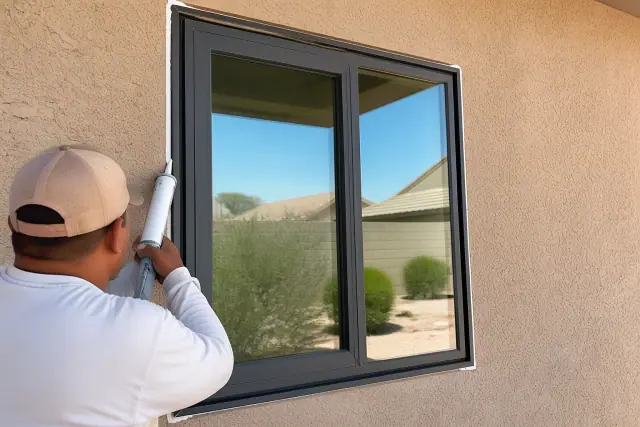
Contractor sealing the frame of a new aluminum window on a stucco home in Mesa, AZ.

Aluminum provides rigidity for larger openings and commercial storefronts. Thermally broken profiles interrupt conductive heat transfer, an important detail when dark frame surfaces can climb past 150 degrees in direct August sun.

Explore Service

Custom Windows

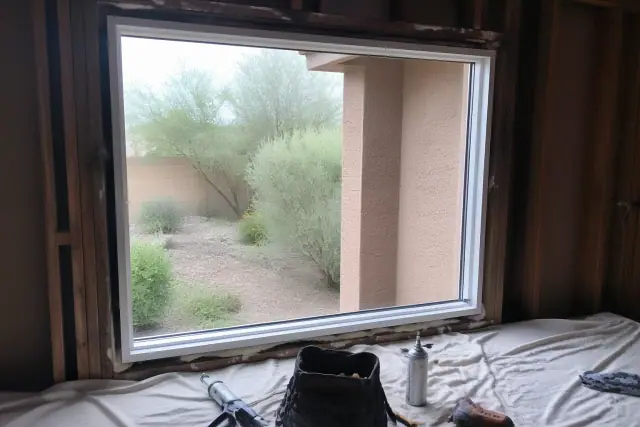
Window frame installation in progress with tools and materials on a drop cloth at a home in Mesa, AZ.

Historic Downtown Mesa homes and architecturally distinctive new builds may need dimensions outside standard sizing. Custom fabrication can match exact rough openings, including arched, angled, and oversized configurations.

Sliding Windows

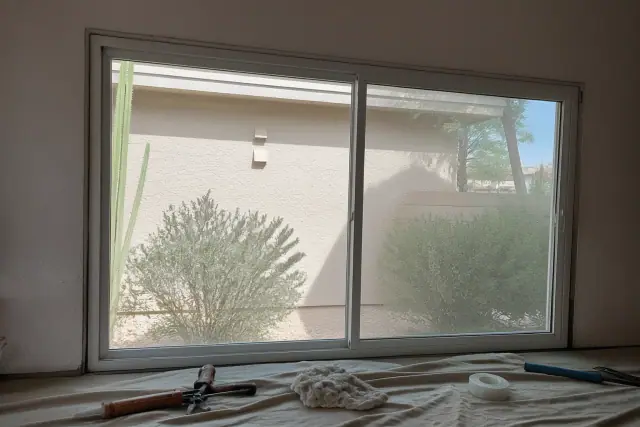
Sliding window frame installation in progress at a residential job site in Mesa, AZ.

Sliding windows suit patios and secondary bedrooms that need a wide, low-profile opening. Dual weatherstripping and reinforced rollers support repeated operation in Mesa's dusty, gritty conditions.

Casement & Awning Windows

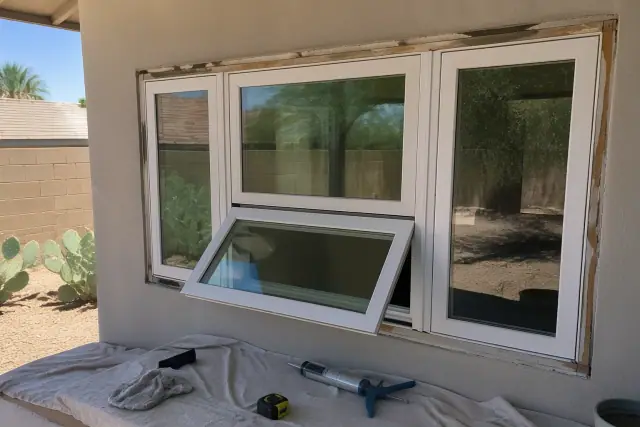
New casement and awning window installation in a Mesa, AZ home with tools on a drop cloth.

Casement sashes crank outward and compress against the frame for a tighter air seal, making them useful on west-facing walls exposed to blowing dust. Top-hinged awning windows can provide ventilation during mild weather and light monsoon rain, including above kitchen sinks and in bathrooms.

Picture Windows

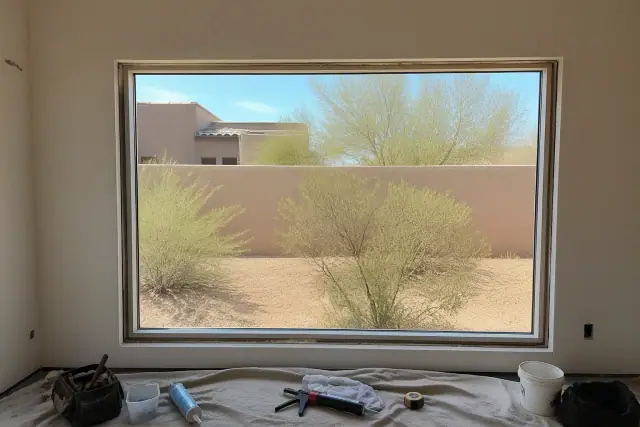
A window frame installed in a stucco wall with construction tools on a drop cloth at a job site in Mesa, AZ.

Fixed picture windows maximize glass area and views without moving parts that can admit air over time. High-performance low-emissivity glass helps keep the larger glass area from adding unnecessary heat gain.

Bay & Bow Windows

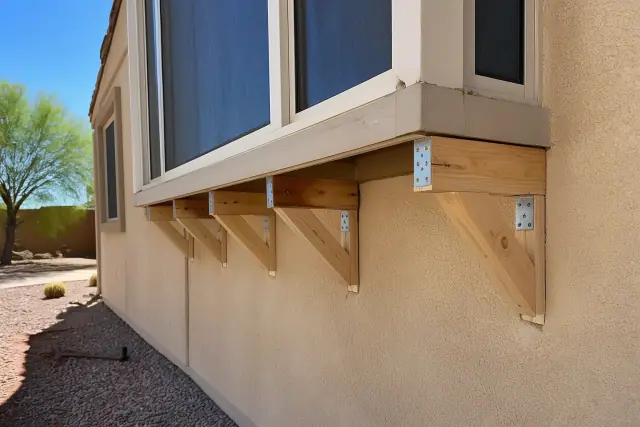
Contractor inspecting bay window support brackets on a stucco home in Mesa, AZ.

Bay windows project outward in a three-panel angled configuration, while bow windows use four or more panels for a gentler curve. Both require properly reinforced headers and support structures, especially on larger Eastmark and Alta Mesa homes.

Window Repair & Glass Replacement

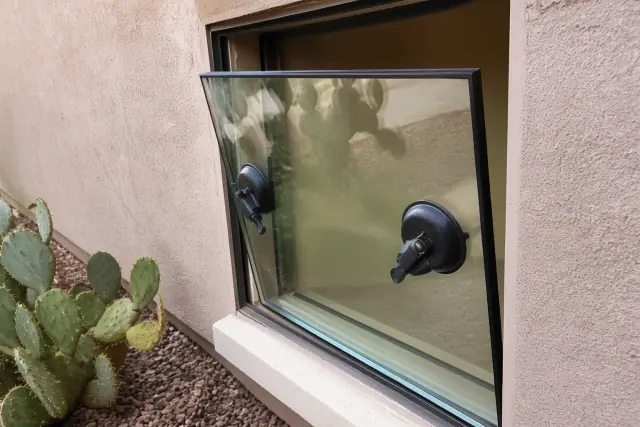
A replacement glass insert with safety suction tools being installed in a window frame at a home in Mesa, AZ.

Frame damage, failed hardware, and seal problems may be corrected with targeted repair instead of full replacement. Cracked or fogged insulated glass units can often be replaced without disturbing a structurally sound frame.

Commercial Windows

Commercial window frame installation with tools and sealant at a job site in Mesa, AZ.

Storefronts, offices, and multi-tenant buildings need window systems that address commercial code requirements and higher wind-load ratings where applicable. Office and storefront replacement is planned to limit disruption to business operations.

Window Selection

How to Choose the Right Windows for Mesa Heat

A Mesa window should be evaluated as a complete assembly: frame, glazing, coatings, gas fill, operating style, and installation details. Because the cooling season can stretch from April through October, solar heat gain coefficient is especially important on south- and west-facing glass, while U-factor, visible transmittance, and air leakage complete the performance picture.

Solar Heat Gain Coefficient

A low solar heat gain coefficient, or SHGC, limits radiant heat entering through the glass. This rating deserves particular attention on Mesa's south- and west-facing walls, where a cold-climate window with a high SHGC can still underperform.

U-Factor and Glass Package

Compare double- or triple-pane construction, low-emissivity coatings, argon or krypton gas fill, and the window's U-factor. The NFRC label provides independently tested U-factor, SHGC, visible transmittance, and air leakage values for a complete comparison.

Frame Material

Vinyl offers insulating chambers and a strong efficiency-to-cost balance for residential work. Aluminum may be the better structural fit for larger openings and storefronts, but thermally broken profiles are important for reducing conductive heat.

Opening Style and Air Leakage

Casement windows compress against their frames and typically test tighter for air leakage than sliders. Sliding windows remain practical for wide openings when their weatherstripping and rollers are specified for dusty conditions.

Home Design and Structural Needs

Opening size, wall construction, room use, and architectural character all shape the right choice. Picture windows suit uninterrupted views, custom units solve unusual openings, and projecting bay or bow windows require deliberate load support.

Project Scope and Budget

Energy-efficient windows typically run $450 to $1,100 per window installed, depending on frame material, glass package, size, and installation complexity. On a full home, triple-pane glass can add roughly $700 to $2,400 in material cost compared with standard double-pane, so the product mix should match the rooms and exposures that need it most.

Mesa Window Problems

Common Window Problems in Mesa Properties

Intense western sun, summer monsoon dust, low humidity, and broad daily temperature swings can expose weaknesses in older glass, seals, frames, and hardware. Matching the symptom to the right repair or replacement scope helps avoid treating every window issue as a full-unit project.

Request Window Assessment

Excessive Solar Heat Gain

Single-pane and aging dual-pane windows can allow radiant heat into a room and drive longer cooling cycles. The effect is especially noticeable on west-facing glass exposed to late-afternoon sun.

Dust and Air Leaks

Worn weatherstripping and loose seals can admit hot air and fine debris during monsoon winds. Compression-seal casements or sliders with dual weatherstripping address the opening style's specific leakage points.

Fogged or Failed Glass Seals

Fog or condensation trapped between panes usually points to an insulated glass seal failure. When the surrounding frame is structurally sound, the glass unit can often be replaced without replacing the entire window.

Cracked Glass

Cracked glass needs an evaluation of both the pane and the surrounding sash or frame. Glass-only replacement may be suitable when the frame and operating hardware retain their structural integrity.

Frame or Hardware Damage

Damaged frames, failed locks or operators, and rollers worn by gritty conditions can interfere with sealing and smooth operation. Targeted frame or hardware repair can correct these problems when full replacement is not warranted.

UV Fading and Hot Glass

Unprotected west-facing glass can contribute to visible fading of flooring, cabinetry, and furniture within a few years. Low-emissivity coatings reduce ultraviolet transmission and help limit the hot-glass discomfort felt near a window on a 115-degree afternoon.

Why Choose Us

Why Choose Phoenix Window Co. in Mesa?

Phoenix Window Co. is a locally owned, family owned window company that measures, permits, installs, and supports residential and commercial projects across Mesa and the East Valley. Recommendations reflect the building, sun exposure, and desert conditions, while the work is handled by the company's own installation teams rather than subcontracted labor.

Desert-Specific Recommendations

High UV exposure, low humidity, monsoon dust, and wide daily temperature swings affect window coatings, seals, and hardware differently than milder climates. Product recommendations account for those conditions instead of defaulting to a generic national specification.

Permits and Documented Ratings

Mesa follows the International Energy Conservation Code as adopted by the City of Mesa Building Safety Division, and full-frame replacements typically require a permit and inspection. Phoenix Window Co. pulls required permits, schedules inspections, and uses the NFRC label to compare documented performance values.

In-House Installation Teams

The company's own crews remove old units, protect surrounding stucco and drywall, set new frames correctly, and clean the site after the work. Keeping installation in-house supports a consistent process for homes, storefronts, offices, and multi-tenant properties.

Simple Process

Our Window Installation Process in Mesa

Every project begins with the property rather than a preset package. The process moves from measurements and exposure review through product selection, permitting, careful installation, and a final operating walkthrough.

01.

In-Person Consultation and Estimate

Start with a free estimate at the property to discuss rooms, comfort concerns, project scope, and budget. Existing openings are measured so replacement and custom options can be evaluated accurately.

02.

Opening and Exposure Assessment

Each elevation is reviewed for sun exposure, and the areas around the frames are checked for stucco cracking or wood rot. Room use and opening style are also documented before product recommendations are made.

03.

Product and Glass Selection

Frame material, glass package, U-factor, and SHGC targets are matched to orientation and property needs. That may mean double-pane low-E glass for east-facing bedrooms or a higher-performance package for west-facing living rooms.

04.

Permitting and Site Preparation

Required City of Mesa permits are pulled and inspections are scheduled for qualifying full-frame work. Before removal begins, the crew prepares the work area to protect nearby stucco, drywall, finishes, and furnishings.

05.

Precise Window Installation

Old units are removed without unnecessary damage to surrounding finishes, and new frames are set plumb and level. Proper flashing, a complete perimeter seal, and insulation backer rod address water and air control at the opening.

06.

Final Walkthrough and Support

The crew demonstrates window operation and basic maintenance, then cleans the work area before leaving. Phoenix Window Co. remains available if hardware, screens, or seals need attention after installation.

Project Goals

Window Project Goals for Mesa Properties

Case Study 1: Heat-Control Goal: For west-facing rooms, the product plan emphasizes low SHGC glass, low-emissivity coatings, and tight frame seals to reduce radiant heat and hot spots.

Case Study 2: Repair-First Goal: A fogged glass unit, failed operator, or damaged frame is evaluated for targeted repair before full replacement is recommended.

Case Study 3: Business-Continuity Goal: Storefront and office replacement is sequenced to address commercial performance requirements while limiting disruption to normal operations.

Plan Your Window Project

Schedule a Mesa
Window
Estimate

Request a free window estimate for a Mesa home, storefront, office, or multi-tenant property. Phoenix Window Co. will review the openings in person and explain the frame, glass, repair, or replacement options that fit the project.

Mesa Window Help

FAQs About Energy-Efficient Windows in Mesa, AZ

Get practical answers about window performance, cost, repair, permitting, product selection, and service coverage for Mesa properties. For an opening-specific recommendation, request an in-person estimate.

Call Phoenix Window Co.

For Mesa, look for double-pane vinyl or thermally broken aluminum frames paired with low-emissivity glass and a low solar heat gain coefficient. South- and west-facing openings need particular attention because SHGC controls radiant heat gain while preserving useful visible light.

Strong overall performance combines a low U-factor, an appropriately low SHGC, dual- or triple-pane construction, low-emissivity coatings, and argon or krypton gas fill. ENERGY STAR certification and the NFRC label help compare independently tested U-factor, SHGC, visible transmittance, and air leakage values.

Double-pane vinyl windows with a low-E coating and argon fill offer a strong efficiency-to-cost balance for many Mesa homes. Casements typically seal tighter than sliders because the sash compresses against the frame, while fixed picture windows eliminate operating joints and can perform well with the right glass package.

Energy-efficient windows typically cost $450 to $1,100 per window installed, with frame material, glass package, size, stucco work, and structural complexity affecting the total. For a full home, triple-pane glass can add roughly $700 to $2,400 in material cost compared with standard double-pane. An itemized estimate shows which conditions apply to the property.

There is not a blanket free-window program for every Arizona homeowner. The federal Weatherization Assistance Program may include window improvements for income-qualified households through local community action agencies, while Salt River Project and Arizona Public Service may offer qualifying efficiency rebates rather than free replacement. Check current requirements directly with the Arizona Department of Housing and the property's utility provider.

Federal programs have historically allowed 10 percent of qualifying window and skylight product costs, excluding installation labor, up to a $600 annual cap. Tax rules can change by year, so confirm the requirements that apply in 2026 with the IRS or a tax professional before relying on a credit. Keep NFRC labels and product documentation for any claim.

ENERGY STAR figures cited for replacing single-pane windows indicate average household energy-bill reductions of up to 13 percent nationwide and estimated annual savings of $101 to $583, depending on climate and home size. The Mesa-focused figures indicate $464 or more per year may be possible where long cooling seasons and heavy west-facing glass increase the load. Actual results vary with the home, existing windows, and selected product.

Full-frame window replacement in Mesa typically requires a permit and inspection under the International Energy Conservation Code as adopted by the City of Mesa Building Safety Division. Phoenix Window Co. pulls required permits and schedules inspections as part of qualifying full-frame projects.

Targeted repair may be appropriate when the problem is limited to hardware, rollers, a damaged frame area, weatherstripping, or a failed glass unit and the rest of the assembly remains sound. Full replacement makes more sense when the frame, seal, glazing, or opening condition prevents a durable repair or when broader performance upgrades are the goal.

Often, yes. Fogging between panes commonly indicates a failed insulated glass seal, and the glass unit can usually be replaced without disturbing a structurally sound frame. The frame and hardware should be inspected before choosing that scope.

Casements use a compression seal and typically provide a tighter air-leakage rating, which can help on walls exposed to blowing dust. Sliders remain practical for wide openings when equipped with dual weatherstripping and reinforced rollers suited to gritty conditions.

A bay window projects outward with a three-panel angled configuration, while a bow window uses four or more panels to form a gentler curve. Both add glass area and interior dimension, and both need properly engineered header and support details.

The process starts with measurements, sun-exposure review, and checks for stucco cracking or wood rot around the openings. After frame and glass selection, the team handles required permitting, removes old units carefully, installs new frames plumb and level with flashing and backer rod, and finishes with an operation and maintenance walkthrough.

Commercial storefronts, offices, and multi-tenant buildings are evaluated for applicable code and wind-load requirements as well as opening size and operating needs. Replacement work is sequenced to limit disruption while addressing the glass and frame performance required by the property.

Phoenix Window Co. works throughout Mesa, including Dobson Ranch, Eastmark, Las Sendas, Red Mountain, Alta Mesa, the Fiesta District, and Downtown Mesa. The company also serves Tempe, Chandler, Gilbert, Queen Creek, and Apache Junction across the surrounding East Valley.