Proudly serving Phoenix, Scottsdale, Mesa, Glendale, Chandler, Gilbert & surrounding areasCall or Text 24/7: 602-464-4613
Aerial drone view of a residential neighborhood with Saguaro cacti and mountain silhouettes in Phoenix, AZ.

Commercial Storefront Window Installation and Glass Replacement in Phoenix, AZ

Phoenix Window Co. installs and repairs commercial windows for offices, retail centers, restaurants, and warehouses across Phoenix. Our work includes storefront systems, Low-E glazing packages, aluminum and vinyl frames, custom windows, and commercial glass replacement. We also coordinate new construction window packages and retrofit projects for existing buildings.

Summer surface temperatures on Phoenix storefronts and office facades routinely climb past 150 degrees, exposing weak seals, aging aluminum frames, and single-pane glass. Heat gain, drafts, and failed insulated glass can leave occupants uncomfortable while rooftop HVAC systems work harder. We match Low-E glass, gas fills, and thermally broken framing to Arizona's wide day-to-night temperature swings instead of relying on a generic national specification.

Our crews hold current Arizona Registrar of Contractors licensing, pull permits through the City of Phoenix Planning and Development Department, and follow American Architectural Manufacturers Association installation standards. We also specify performance with National Fenestration Rating Council measures and the International Energy Conservation Code as adopted by the city.

Phoenix Window Co. provides commercial window installation across Phoenix and nearby Scottsdale, Tempe, Mesa, Chandler, and Glendale.

★ ★ ★ ★ ★4.9/5.0 Customer Rating · 21 Years of Window Experience · Thousands of Windows Installed · Licensed, Bonded & Insured · Serving Homes & Businesses

Commercial Window Options & Benefits

What Are Commercial Windows?

Commercial windows use heavier-gauge framing, larger glass sizes, and structural engineering designed for wind loads and life-safety requirements. Their glass, fasteners, sealants, and frame systems must work together as part of the building envelope.

Office, retail, restaurant, and warehouse openings can involve fixed glazing, operable windows, storefront frames, commercial entrance doors, or multi-story curtain walls. Each application brings different structural, fire, egress, and accessibility considerations than a typical residential opening.

A commercial window project may be a complete new-construction package or a retrofit fitted into older, non-standard rough openings. The right approach depends on glass performance, frame strength, opening condition, building height, access, and the property's operating needs.

Benefits of Commercial Window Upgrades

For a mid-size Phoenix office running cooling nine months a year, better glazing can affect both operating cost and occupant comfort. Energy-efficient commercial windows can cut annual energy costs by 15 to 25 percent in Arizona buildings while addressing appearance, fading, drafts, and noise.

  • Low-E glazing can reduce heat transfer by up to 30 percent compared with uncoated glass.
  • UV-protective interlayers help slow fading of merchandise, flooring, and signage.
  • Insulated glass with argon or krypton fills reduces conductive heat transfer.
  • Lower solar heat gain can ease the load on rooftop HVAC equipment.
  • Tighter frames and compression seals reduce drafts and air infiltration.
  • Updated storefront glass improves curb appeal for customer-facing properties.
  • Double- and triple-pane packages can improve noise control near busy roads.
  • Thermally broken frames interrupt heat conduction through commercial aluminum.
Commercial Window Services

Phoenix Commercial Window Services

Our commercial work covers complete window packages, targeted replacement, and code-matched glazing for new and existing properties. We select glass type, thickness, framing, and installation details for the opening and building rather than forcing one product into every project.

Commercial Window Installation & Replacement

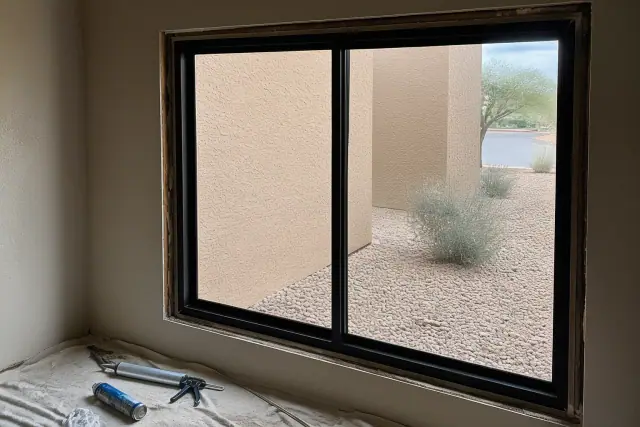
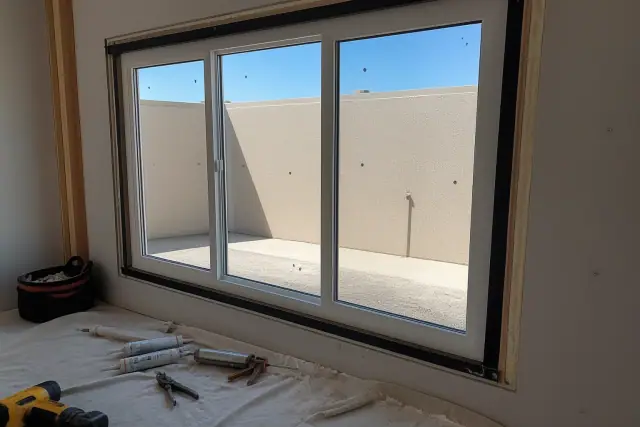
Commercial window installation featuring tools and materials on a drop cloth against a stucco wall in Phoenix, AZ.

We install window systems for new commercial openings and replace aging units that no longer meet a building's performance needs. Every scope considers opening dimensions, loads, glass package, frame material, access, and any structural modification required.

Request Estimate

Storefront Glass & Entrance Systems

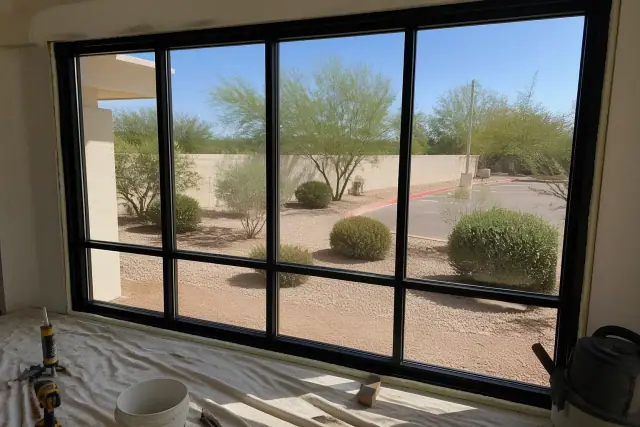
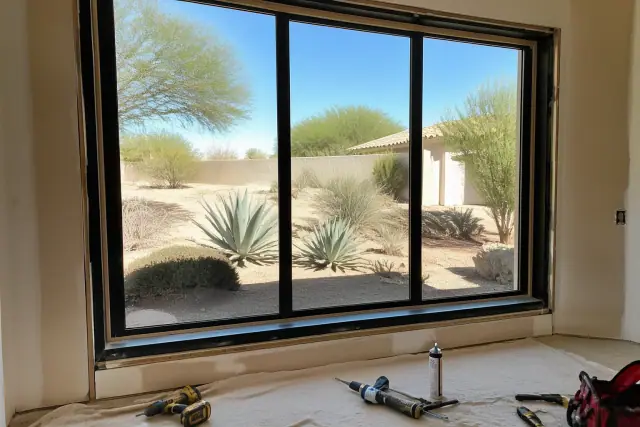
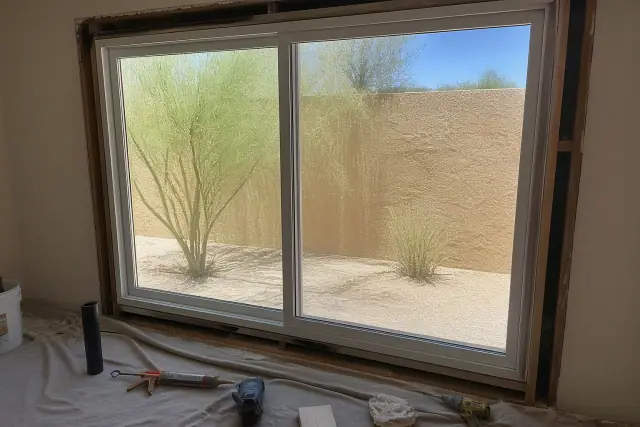
Commercial window frame installation with tools on a drop cloth in Phoenix, AZ, overlooking a sunny desert landscape.

Narrow-frame aluminum storefront systems combine fixed glazing with commercial entrance doors for retail and restaurant properties. We configure them to showcase the interior while meeting Phoenix wind-load and safety requirements.

Request Estimate

Commercial Glass Replacement

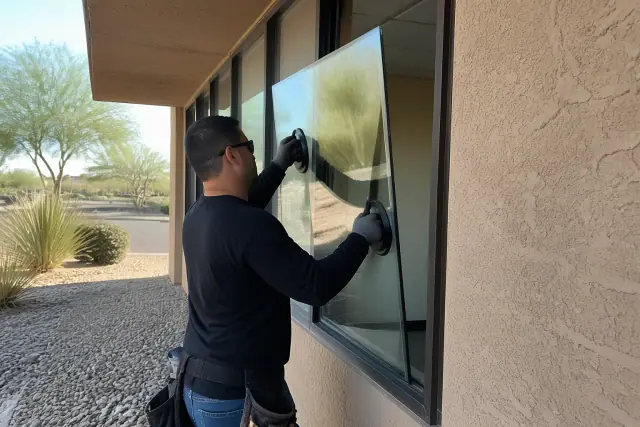
Technician installing a commercial glass window pane using suction tools at a job site in Phoenix, AZ.

We replace broken storefront and commercial glass, matching the glass type, thickness, and safety requirements to the existing opening. Common commercial glass sizes are stocked to help secure street-level entrances and get affected businesses operating again.

Request Estimate

Curtain Wall & Fixed-Lite Glazing

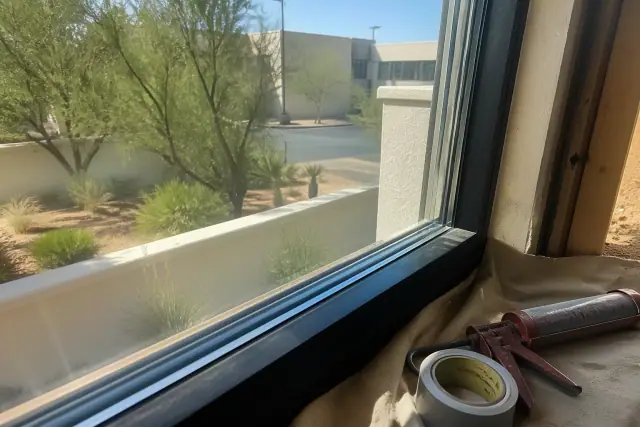
Worker caulking the frame of a new commercial window in Phoenix, AZ, with desert landscaping in the background.

Our glazing scopes range from multi-story curtain wall systems to fixed-lite storefront panels. Glass, framing, and attachment details are matched to the structural and code demands of the building.

Request Estimate

New Construction Window Packages

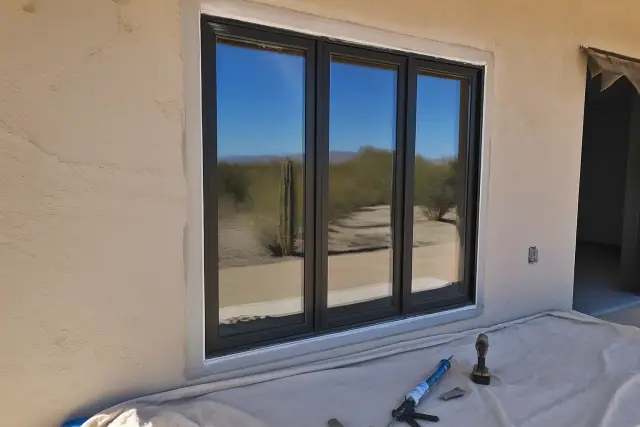
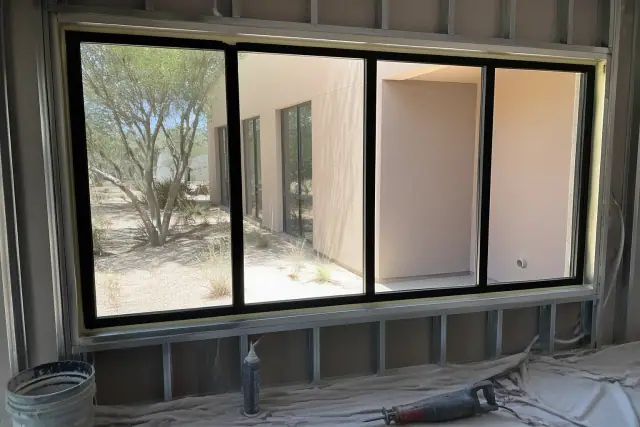
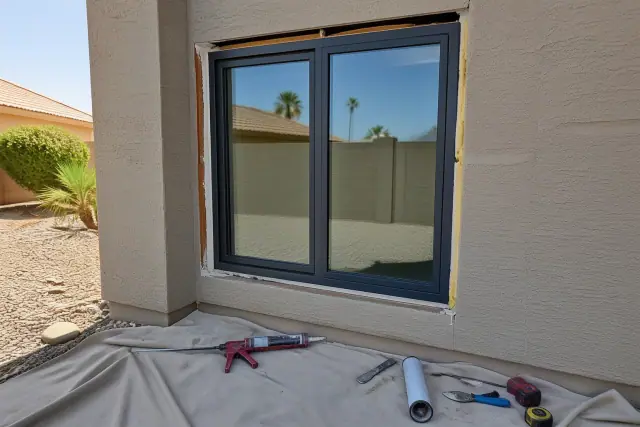
A new commercial window frame installed in a stucco wall at a construction site in Phoenix, AZ.

For new commercial buildings, we coordinate with general contractors and architects to deliver the glazing specifications called out in the plans. Measurements, energy-code obligations, frame systems, glass packages, and installation sequencing are confirmed before materials are ordered.

Request Estimate

Commercial Remodels & Retrofits

A commercial window frame installation in progress at a jobsite in Phoenix, AZ, with tools on a drop cloth.

Retrofit work accounts for older construction tolerances, non-standard openings, worn frames, and signs of water intrusion. We fit new units to existing conditions and determine whether the rough opening needs repair or structural changes before installation.

Request Estimate
Commercial Window Options

Commercial Window & Frame Options

Glass package, frame material, opening size, solar exposure, noise, and operating style all shape the right commercial window. These options cover the performance and architectural needs described for Phoenix offices, storefronts, restaurants, mixed-use buildings, and warehouses.

Low-E double-pane window frame installation on a jobsite in Phoenix, AZ with tools and desert landscaping visible.

Low-E Double-Pane Windows

Double-pane Low-E glass covers most Phoenix retail and office needs while keeping installed cost below a comparable triple-pane package. The coated insulated unit limits solar heat gain without blocking useful visible light.

  • Reflects infrared heat while allowing visible light through.
  • Uses an insulated space that can hold argon or krypton gas.
  • Balances thermal performance and cost for standard offices.
  • Works well for typical retail storefront openings.
  • Pairs with UV protection to slow interior fading.
Request Estimate
Triple-pane commercial window installation with tools on a drop cloth in Phoenix, AZ.

Triple-Pane Windows

Triple-pane windows add a third lite and another gas-filled space for lower U-factor performance and better noise control. They suit highly exposed openings where extra insulation or sound reduction justifies the added cost.

  • Provides a lower U-factor than a comparable double-pane unit.
  • Offers better noise reduction for street-facing rooms.
  • Can serve restaurants with large glass frontages.
  • Fits conference rooms near the I-10 and I-17 noise corridor.
  • Typically carries a 15-25% higher upfront cost than double-pane glass.
Request Estimate
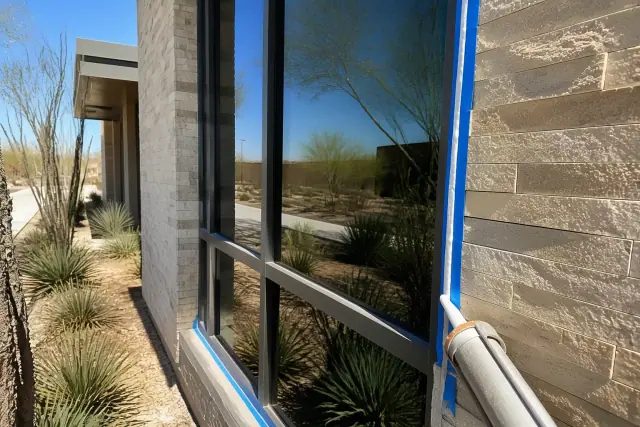
Thermally broken aluminum window frames installed in a commercial building construction site in Phoenix, AZ.

Thermally Broken Aluminum Frames

Aluminum is the standard frame material for storefronts and mid-rise buildings because it supports large spans without sagging. A thermal break adds an insulating barrier through the frame to reduce conductive heat transfer.

  • Handles large storefront glass spans.
  • Provides structural capacity for high wind loads.
  • Holds up under intense UV exposure.
  • Interrupts heat conduction with an insulating barrier.
  • Supports narrow-frame storefront designs.
Request Estimate
Reinforced vinyl window frame installation in progress at a home in Phoenix, AZ, with tools visible on a drop cloth.

Reinforced Vinyl Windows

Vinyl frames provide strong insulation value and lower maintenance for smaller commercial spaces and mixed-use buildings. Compared with aluminum, vinyl favors thermal performance and cost while aluminum favors strength and larger spans.

  • Offers strong thermal performance for smaller openings.
  • Requires less frame maintenance than many alternatives.
  • Fits office and mixed-use applications.
  • Keeps frame cost lower than comparable commercial aluminum.
  • Can be reinforced for appropriate commercial openings.
Request Estimate
A commercial window frame installation in progress on a stucco wall in Phoenix, AZ, with tools on a drop cloth.

Specialty & Operable Window Styles

Operable and architectural styles address ventilation, maintenance, light, and facade design beyond fixed storefront glass. We match the operating method and frame material to the room, opening, and property type.

  • Casement and awning windows compress tightly against the frame.
  • Sliding windows suit break rooms, back offices, and warehouse man-doors.
  • Picture windows maximize glass area and natural light without moving parts.
  • Bay and bow windows add depth to office entries and retail facades.
  • Fiberglass frames suit specialty or historic renovation projects.
Request Estimate
Finding Your Right Fit

Choosing the Right Commercial Window Approach

The best specification combines a Low-E dual- or triple-pane glass package, a low solar heat gain coefficient, and a frame suited to the opening's span and exposure. Building height, access, noise, operating style, structural changes, and safety-glass locations also shape the final scope.

Arizona Heat-Focused Specifications

We prioritize low solar heat gain, Low-E coatings, gas-filled insulated glass, and thermally broken framing for Phoenix's intense UV exposure, dust storms, and wide temperature swings. Sealants, gaskets, and glazing compounds are selected for desert conditions.

Code & Permit Coordination

We review City of Phoenix requirements, pull project permits, and align installation with AAMA and manufacturer guidance. U-factor and solar heat gain coefficient targets are checked against the city's adopted energy code before glazing is ordered.

Commercial-Site Planning

Commercial installations are scheduled around operating hours where possible, with work areas sectioned off and storefront or entrance replacements completed in phases. This approach helps restaurants, retail stores, and offices continue serving customers during the project.

What Sets Us Apart

Why Phoenix Businesses Choose Our Window Approach

Phoenix Window Co. brings current Arizona contractor licensing, commercial-project planning, and climate-matched glazing specifications to each job. A free on-site estimate itemizes frame material, glass package, and labor so building owners can see what drives the scope before work begins.

Get a Free Estimate

Fogging Between Panes

Visible condensation or cloudiness inside an insulated glass unit points to a failed perimeter seal. Once outside air and moisture reach the space between panes, the unit loses clarity and some of its insulating performance.

Failing Seals & Drafts

Cracked rubber seals, deteriorated gaskets, and gaps around aging frames can allow noticeable drafts even while the HVAC system is running. An opening inspection distinguishes a replaceable glazing issue from frame or rough-opening damage.

UV-Faded Interiors

Faded flooring, merchandise, or signage near glass can reveal prolonged solar and UV exposure. Low-E glazing paired with UV-protective interlayers helps slow this damage without sacrificing the daylight a lobby or storefront needs.

Rising Cooling Costs

Cooling costs that rise without a change in usage may point to heat gain through aging glass or conductive frames. Reviewing the glass package, solar exposure, frame design, and seal condition helps identify where the building envelope is underperforming.

Single-Pane Heat Gain

Single-pane glass still present in a pre-1990s building offers little defense against Phoenix solar heat. A modern insulated unit combines multiple panes, Low-E coating, and a sealed gas space to improve thermal performance.

Cracked or Chipped Glass

Broken street-level glass can affect safety, security, weather protection, and whether an entrance can remain open. We stock common commercial sizes and offer same-day glass replacement in many cases, then match the replacement to the required thickness and safety type.

How it works

Our Commercial Window Process

Commercial window work moves from field verification and code review through ordering, removal, installation, and inspection. Each step is documented so the specified glass, frame, fasteners, flashing, and sealants match the opening and permit scope.

01.

On-Site Measurement & Load Assessment

We measure every opening, assess loads and access, inspect the surrounding frame, and note the building's operating needs. Existing conditions establish whether the project is a direct replacement or requires opening repair or modification.

02.

Code & Glazing Specification Review

We confirm City of Phoenix code obligations, permit requirements, wind loads, safety-glass locations, and energy-performance targets. Glass type, thickness, coating, gas fill, frame material, and operating style are then matched to those requirements.

03.

Material Ordering & Project Scheduling

Glazing and framing are ordered to the confirmed specification and opening dimensions. Installation phases are planned around operating hours where possible, including coordination with general contractors and architects on new builds.

04.

Unit Removal & Opening Inspection

Our crews remove the existing units and inspect each rough opening for water intrusion, frame rot, or dimensional issues. Any condition that could affect attachment, sealing, or fit is addressed before the new unit goes in.

05.

Installation, Flashing & Sealing

New units are set with manufacturer-rated fasteners, flashing, sealants, and gaskets following AAMA guidance and the product specification. Work areas are sectioned off as needed to support a controlled commercial installation.

06.

Final Performance Inspection

We complete a final inspection to confirm air- and water-infiltration ratings and document the installation for permit sign-off. The project is closed only after the installed windows and finish details match the approved scope.

Plan Your Commercial Project

Schedule a Commercial
Window
Consultation

Request a free on-site estimate for a Phoenix office, storefront, restaurant, retail center, or warehouse. We will review the openings and itemize the frame material, glass package, labor, access, and structural factors shaping the project.

Commercial Window Help

Phoenix Commercial Window FAQs

These answers cover commercial window pricing, glass and frame choices, project types, warning signs, installation, and service coverage described for Phoenix-area properties.

Call Our Experts

Standard aluminum or vinyl commercial windows with Low-E glazing typically run $400 to $900 per window installed in Phoenix. Custom sizes, impact-rated glass, curtain walls, building height, access, and structural changes can raise the cost, while the free estimate itemizes the frame, glass package, and labor.

Yes. We coordinate new construction window packages with general contractors and architects, and we retrofit existing buildings where openings may have older tolerances or non-standard dimensions.

A strong Phoenix specification combines Low-E coated dual- or triple-pane glass, a low solar heat gain coefficient, and thermally broken aluminum or reinforced vinyl framing. The final choice should also account for the opening's size, solar exposure, noise, and structural demands.

Commercial windows use heavier-gauge framing, larger glass sizes, and structural engineering for wind loads and life-safety requirements. Commercial buildings can also involve different fire, egress, and accessibility provisions than a typical house.

Common signs include condensation between panes, cracked seals or gaskets, drafts, chipped glass, faded interiors, and rising cooling costs without a usage change. Older single-pane glass is another reason to evaluate the opening's thermal performance.

Double-pane Low-E glass covers most standard retail and office needs while keeping installed cost lower. Triple-pane glass adds insulation and noise reduction for street-facing rooms, large restaurant frontages, and highly exposed openings.

Low-E coating reflects infrared heat while allowing visible light into the building. Paired with insulated glass and a UV-protective interlayer, it can reduce heat gain and help slow fading near storefronts, lobbies, and offices.

Aluminum is stronger for large spans, storefronts, and high wind loads, especially when a thermal break limits heat conduction. Vinyl offers better insulation and lower maintenance for smaller commercial openings, offices, and mixed-use buildings.

A storefront system combines fixed glazing and commercial entrance doors in a narrow-frame aluminum assembly. It is commonly used by retail and restaurant properties that need visibility, access, and a frame designed for commercial wind loads.

Commercial codes require safety glass in door assemblies, low-height glazing, and other defined hazard locations. We match tempered or laminated glass to entrances, storefronts, and any opening where the approved scope calls for impact-resistant safety glazing.

The process starts with field measurements, a load assessment, and code review before glazing is ordered. Crews then remove existing units, inspect the rough openings, install with specified fasteners and sealants, and complete a final air- and water-infiltration inspection.

We schedule commercial installation around operating hours where possible. Work areas can be sectioned off and storefront or entrance replacement phased so restaurants, retailers, and offices can continue serving customers.

Phoenix Window Co. provides commercial and residential window installation across Phoenix, Scottsdale, Tempe, Mesa, Chandler, and Glendale. Commercial project types include offices, retail centers, restaurants, storefronts, and warehouses.