Proudly serving Phoenix, Scottsdale, Mesa, Glendale, Chandler, Gilbert & surrounding areasCall or Text 24/7: 602-464-4613
Aerial drone view of a residential neighborhood with Saguaro cacti and mountain silhouettes in Phoenix, AZ.

Casement & Awning Window Repair and Installation in Phoenix, AZ

Phoenix Window Co. installs casement and awning windows for homes and businesses across Phoenix and the metro. We fit vinyl casement windows, aluminum awning windows, energy-efficient glass packages, and custom-sized units. Our crews also handle replacement, window repair, and glass replacement when existing units are drafty, hard to crank, or fogged between the panes. Residential and commercial options include sliding, picture, bay, and bow window configurations when an opening calls for a different design.

Phoenix afternoons routinely pass 110 degrees, while monsoon wind, dust, UV exposure, and hard-water spotting punish weak frames and failing seals. We specify Low-E-coated dual- or triple-pane glass, argon gas fill, and reinforced vinyl or aluminum frames for the Sun Corridor's 100-plus-degree temperature swings. Installations follow current International Energy Conservation Code and Energy Star Southwest region requirements, with corrosion-resistant hardware selected for dust and hard-water exposure. That combination helps limit infiltration and gives property owners a clearer path between targeted repair and full replacement.

Start with a free window consultation. We'll measure each rough opening, assess the existing frame, and explain repair-versus-replacement options before preparing an itemized quote.

Phoenix Window Co. installs and services casement and awning windows in Phoenix, Scottsdale, Tempe, Mesa, Glendale, and Chandler.

★ ★ ★ ★ ★4.9/5.0 Customer Rating · 21 Years of Window Experience · Thousands of Windows Installed · Licensed, Bonded & Insured · Serving Homes & Businesses

Phoenix Casement & Awning Window Benefits

What Are Casement and Awning Windows?

Casement windows hinge at the side and crank outward. A double-locking mechanism pulls the sash against weatherstripping, creating a compression fit that outperforms an aging friction-fit track at keeping 115-degree exterior air away from a conditioned interior.

Awning windows hinge at the top and open outward from the bottom. Their roughly 45-degree opening can provide controlled ventilation during a light Phoenix rain while limiting hinge load compared with a fully cranked casement in monsoon wind.

Both styles accept high-performance glass packages, but room layout and exposure should guide the choice. Casements open wider and compress tightly against weatherstripping, while awnings provide ventilation with less sash swing. In a climate that can demand six-plus months of continuous cooling, the frame, glass, hardware, and installation quality all matter.

Benefits of Casement & Awning Windows

Casement and awning windows combine a tight operating seal with flexible glass, frame, and hardware choices for Phoenix homes and commercial properties.

  • Compression seals that limit air infiltration
  • Low-E glass that reflects infrared heat while preserving daylight
  • Argon-filled dual- or triple-pane packages for stronger thermal performance
  • Top-hinged ventilation during light rain
  • Multi-point locking for controlled airflow and security
  • Laminated impact-resistant glass upgrades for monsoon debris
  • Triple-pane noise reduction for homes near flight paths
  • Typical 20-to-30-year service life with proper installation and routine hardware maintenance
Installation & Replacement Services

Casement & Awning Window Services

Phoenix Window Co. installs, replaces, and services casement and awning windows in standard and custom openings. Each recommendation accounts for exposure, ventilation, swing clearance, frame condition, glass performance, architecture, and budget.

Casement Window Installation

Casement window installation in progress at a residential home in Phoenix, AZ.

Side-hinged casement windows crank open for broad ventilation and close against the frame with a compression seal. We square the opening carefully so the crank, sash, double-locking mechanism, and weatherstripping engage as intended.

Request Estimate

Awning Window Replacement

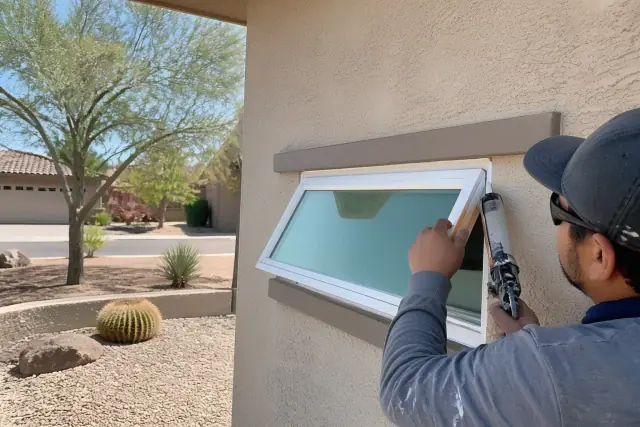
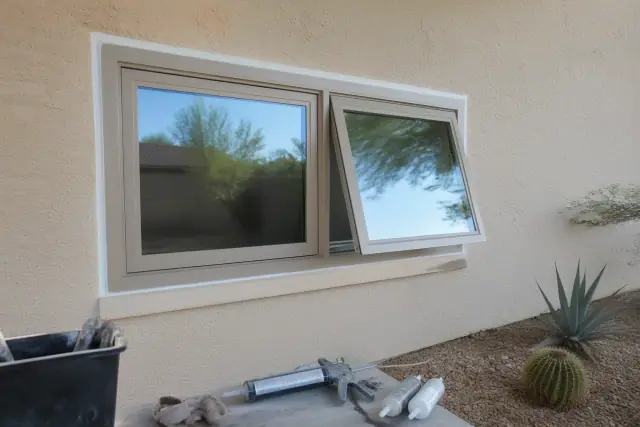
Worker caulking the perimeter of a new awning window on a stucco home in Phoenix, AZ.

Top-hinged awning replacements work well above sinks, in bathrooms, and as transoms over picture windows. We fit corrosion-resistant crank and locking hardware designed for repeated cycling in Phoenix heat, dust, and monsoon conditions.

Request Estimate

Energy-Efficient Glass Upgrades

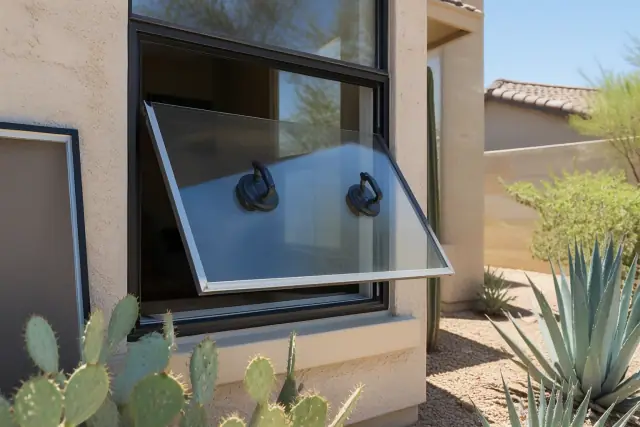
Technician installing an energy-efficient glass insert into a window at a jobsite in Phoenix, AZ.

Low-E-coated dual- and triple-pane glass with argon gas fill helps reflect infrared heat and improve the window's U-factor. UV-protection film options can add solar control for west-facing rooms without blocking visible light.

Request Estimate

Custom Window Sizing & Combinations

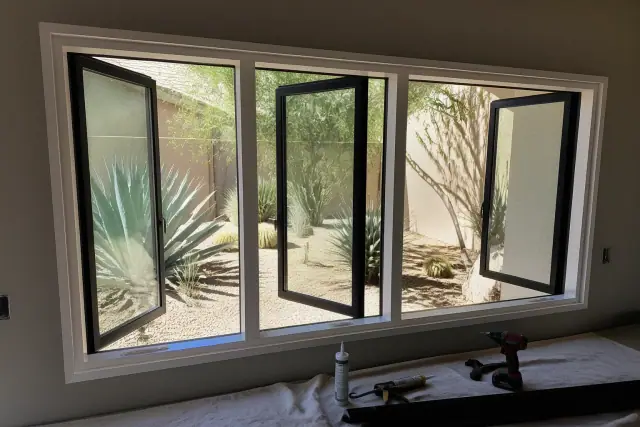
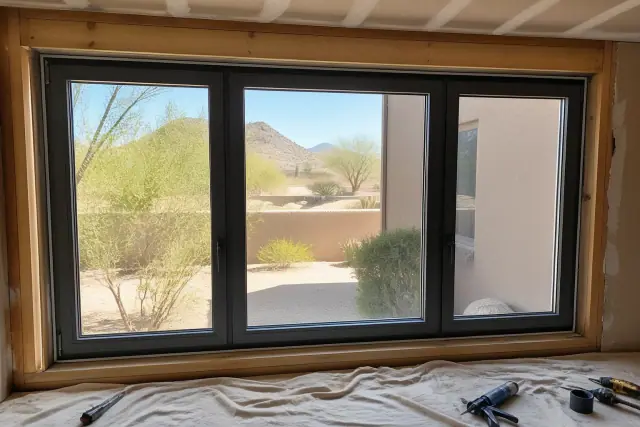
Custom casement and awning window frame installation in a Phoenix, AZ home with desert landscaping visible outside.

Custom sizing covers narrow hallway hoppers, oversized picture windows with casement flanks, bay windows with casement wings, and bow combinations. White vinyl, bronze aluminum, and woodgrain vinyl finishes help coordinate new units with existing trim and stucco.

Request Estimate

Window Repair & Glass Replacement

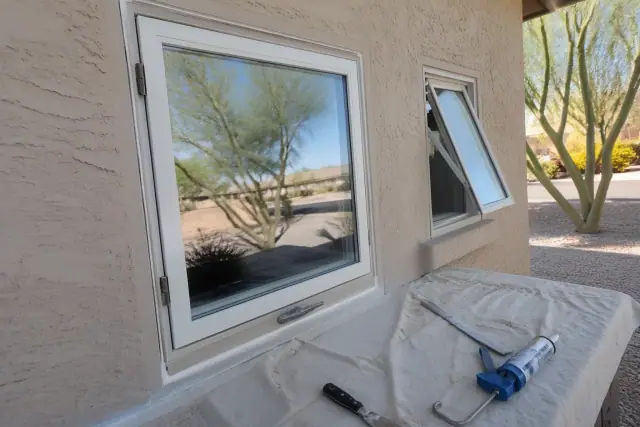
Completed glass window repair and hardware installation on a stucco home in Phoenix, AZ.

Repair service can address spinning crank gears, sticking hardware, worn weatherstripping, blocked weep holes, failed insulated-glass seals, and damaged panes. We assess whether targeted repair or full replacement makes more sense for the frame and opening.

Request Estimate

Commercial Casement & Awning Windows

Caulking the exterior frame of a newly installed casement window on a stucco home in Phoenix, AZ.

Commercial casement and awning projects can use aluminum frames for slimmer sightlines, larger glass spans, and stacked transom configurations. Glass package, thermal break, hardware, and opening size are matched to the building's design and exposure.

Request Estimate
Window Configurations

Casement & Awning Window Options

Frame material, pane count, finish, opening style, and installation method all affect window performance. These source-supported configurations cover the most common choices for Phoenix residential and commercial projects.

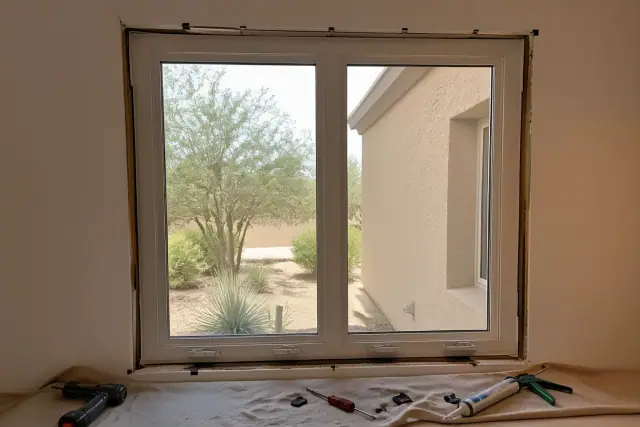
Vinyl casement window installation in progress on a stucco wall in Phoenix, AZ, with tools visible on a drop cloth.

Vinyl Casement Windows

Vinyl casement windows insulate better by nature of the material than bare aluminum and do not conduct heat into the frame in the same way. They are a practical default for many residential replacements exposed to direct desert sun.

  • Natural insulation advantage over bare aluminum
  • Better resistance to hard-water pitting
  • White and woodgrain finish options
  • Compatibility with Low-E dual- or triple-pane glass
  • Affordable fit for standard residential openings
Request Estimate
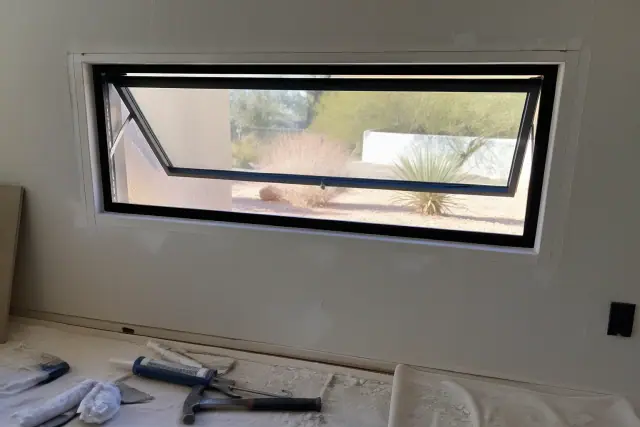
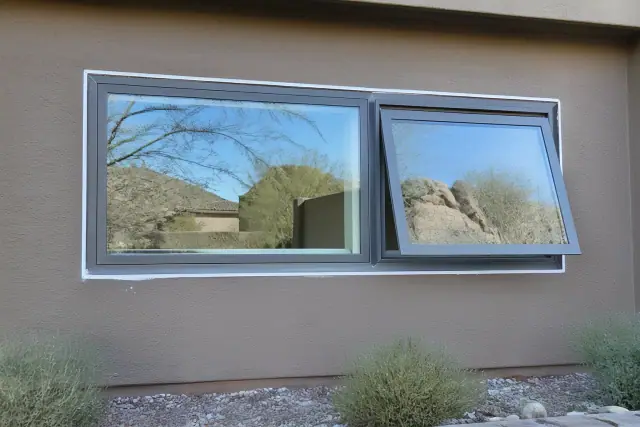
Aluminum awning window frame installation on a stucco wall at a jobsite in Phoenix, AZ.

Aluminum Awning Windows

Aluminum awning windows are lighter, support larger glass spans, and suit contemporary or mid-century architecture. A thermal break is important when the goal is better performance in Phoenix heat.

  • Slim sightlines for modern and ranch architecture
  • Strength for larger glass spans
  • Bronze aluminum finish options
  • Thermal breaks for hot-climate performance
  • Strong fit for commercial and stacked-transom applications
Request Estimate
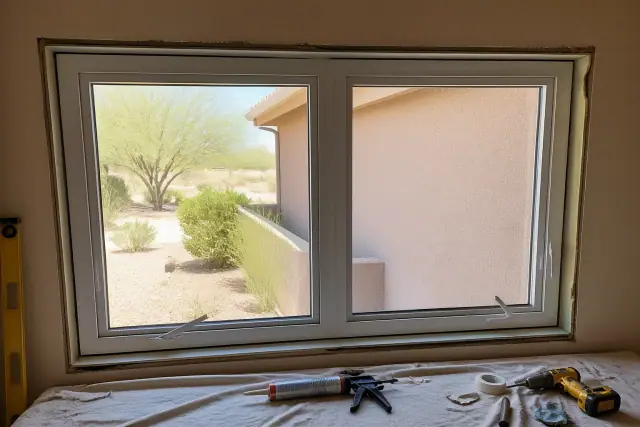
Dual-pane window frame installation at a residential job site in Phoenix, AZ.

Dual-Pane Low-E Windows

Dual-pane Low-E windows pair an insulated glass cavity with a coating that reflects infrared heat while allowing visible light through. Argon gas fill and a suitable frame improve the complete package.

  • Low-E coating that reflects infrared heat
  • Visible daylight through the coated glass
  • Argon gas fill inside the insulated glass unit
  • UV-protection film options for added solar control
  • Practical performance for many residential replacements
Request Estimate
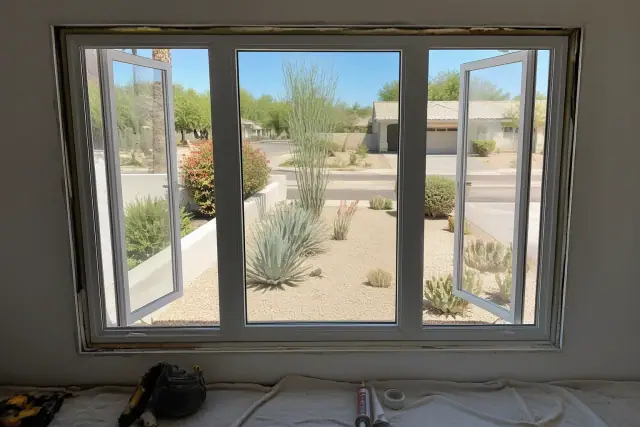
Triple-pane casement window installation in progress on a construction site in Phoenix, AZ.

Triple-Pane Casement Windows

Triple-pane casement windows add a third layer of glass and a second argon-filled cavity, improving the U-factor beyond a standard dual-pane package. The extra pane can also provide noticeable noise reduction.

  • Lower U-factor than a standard dual-pane package
  • Evaluation for west- and south-facing exposures
  • Consideration for pool-facing rooms
  • Noticeable noise reduction near Sky Harbor flight paths
  • Greater weight and price than a strong dual-pane option
Request Estimate
Close-up of a contractor caulking the frame of a new window on a stucco home in Phoenix, AZ.

Custom-Clad and Combination Windows

Custom-clad and combination windows adapt the opening to the home's architecture. Finish choices include white vinyl, bronze aluminum, and woodgrain vinyl, while darker exterior finishes require careful consideration of direct solar exposure.

  • Custom sizes for narrow hoppers and oversized openings
  • Picture windows with casement flanks
  • Bay windows with operable casement wings
  • Bow combinations using three or more casement units
  • Narrow modern frames or traditional grille patterns
Request Estimate
Finding the Right Fit

Choosing the Right Window Approach

The right approach starts with the room's sun exposure, ventilation needs, sash clearance, architecture, and existing frame condition. We compare casement versus awning operation, vinyl versus thermally broken aluminum, dual versus triple panes, and retrofit versus full frame-out installation before recommending a configuration.

Phoenix Climate Experience

Phoenix Window Co. has spent years fitting windows in homes from Arcadia and the Biltmore corridor to Ahwatukee, Encanto, Sunnyslope, and Laveen. That local work informs choices for desert heat, monsoon wind, dust, UV exposure, and hard-water spotting.

Installation Standards

Installations follow manufacturer instructions, AAMA guidelines for water and air infiltration control, and current International Energy Conservation Code and Energy Star Southwest requirements. Each project is also checked against Maricopa County building permit requirements before closeout.

Clear Repair-or-Replace Guidance

The free consultation includes measurements, frame assessment, and a direct repair-versus-replacement discussion. Itemized quotes explain how size, material, glass package, and retrofit or full frame-out work affect cost, and the window warranty covers workmanship on every installation.

What Sets Us Apart

Why Choose Phoenix Window Co. for Casement & Awning Installation?

A window performs as a complete assembly: frame, glass, hardware, flashing, insulation, weather seal, and trim. Phoenix Window Co. evaluates those parts together, then tests operation, lock engagement, and seal contact before considering the installation complete.

Request a Free Consultation

Drafts and Air Leakage

Visible daylight around a closed sash or rising energy use can point to air leakage. In Sunnyslope and Laveen retrofits, single-pane aluminum originals have pushed indoor surface temperatures near the glass into the 90s even with the air conditioner running.

Fogging Between the Panes

Condensation between panes signals a failed seal in the insulated glass unit. Once the seal is compromised, the glass package no longer performs as designed and may need glass replacement or a complete new unit.

Stripped or Sticking Cranks

A crank that spins without engaging the gear track, binds during operation, or requires excessive force needs attention. Heat expansion, dust, missed lubrication, and over-tightening can accelerate wear or strip the gear.

UV-Damaged Vinyl Frames

Vinyl that has become brittle or chalky after long UV exposure may no longer hold hardware and weather seals reliably. Frame condition helps determine whether a component repair remains practical.

Pitted Aluminum and Hard-Water Spots

Monsoon dust and Phoenix hard-water spotting can pit unprotected aluminum and interfere with moving hardware. Finish condition, thermal breaks, and corrosion-resistant hinges matter when aluminum is the right architectural choice.

Blocked Drainage and Worn Seals

Dust can block weep holes and keep monsoon rain from draining as intended. Neglected weatherstripping is a common cause of reduced seal performance after five to seven years, so drainage paths and seals should be checked periodically.

How It Works

Our Casement & Awning Window Process

Our process moves from assessment and exact measurement through removal, flashing, installation, trim, and final testing. Each step protects the opening while helping the sash, crank, locks, glass, and weather seal work together.

01.

Free Window Consultation

We walk the property during a free window consultation, inspect problem units, and discuss repair versus replacement. Sun exposure, ventilation, swing clearance, frame material, glass goals, and budget shape the recommendation.

02.

Measure the Rough Opening

We take precise rough-opening measurements and confirm whether the project uses standard sizing or a custom unit. Frame condition and the surrounding stucco or trim help determine whether a retrofit or full frame-out replacement is appropriate.

03.

Remove the Existing Window

The old sash and frame are removed, down to the studs when the opening requires it. The exposed area is inspected so the new window is not installed over a condition that would compromise fit or sealing.

04.

Flash, Set, and Seal the New Unit

Flashing and a moisture-resistant barrier are installed before the new unit goes into the opening. The frame is sealed, shimmed level and plumb, and insulated around the perimeter.

05.

Insulate and Finish the Opening

Interior and exterior trim complete the opening, and removable screens are fitted after installation. The finish work is coordinated with the frame choice, existing trim, and surrounding stucco.

06.

Test Operation and Code Details

We test crank operation, locking engagement, sash alignment, and weather-seal contact on every unit. Final review follows manufacturer instructions, AAMA installation guidance, and applicable Maricopa County permit requirements.

Plan Your Window Project

Schedule a Free Casement & Awning Window Consultation

Tell us which windows are drafty, fogged, difficult to operate, or ready for an energy-efficiency upgrade. Phoenix Window Co. will measure the openings and provide a straightforward, itemized repair-or-replacement recommendation.

Phoenix Window Help

Casement & Awning Window FAQs

These answers cover performance, price factors, maintenance, replacement signals, and code considerations for casement and awning windows in Phoenix. A property consultation can narrow the options to the actual opening, exposure, and frame condition.

Call Phoenix Window Co.

Awning windows typically cost more than casement windows of similar size and glass package because their reinforced double-locking hardware must hold the sash against wind pressure at a partial opening angle. Both styles generally cost more than standard sliding or double-hung windows because the crank and multi-point locking hardware add complexity. Phoenix Window Co. prices each opening by size, frame material, glass package, and installation scope.

Vinyl or fiberglass frames paired with Low-E-coated dual- or triple-pane glass and argon gas fill are strong performers against Phoenix heat. The frames resist warping under direct sun, while the Low-E coating reflects infrared heat before it transfers indoors. The right pane count depends on exposure, noise, weight, and budget.

Awning windows usually open only to about a 45-degree angle, so they provide less total ventilation than a comparably sized casement. Their crank needs periodic lubrication and adjustment, and the outward-swinging exterior pane can be harder to clean. Hardware that allows fuller rotation can improve cleaning access where the installation permits it.

Casement windows generally cost more upfront than comparable sliding or double-hung units, and the crank gear can wear or strip if it is over-tightened. Their outward swing also needs clearance from walkways, patios, and tight side yards. A square installation is essential for the crank and locking points to engage correctly.

A 36x36 casement window generally provides enough area, width, and height for bedroom egress, but the actual clear opening depends on the specific frame and sash design. Egress code typically requires a minimum net clear opening of 5.7 square feet, a minimum opening height of 24 inches, a minimum opening width of 20 inches, and a sill no more than 44 inches above the floor. We verify the unit's clear-opening specifications against current Maricopa County building code before installation.

Installation cost depends on whether the unit is a retrofit or a full frame-out replacement that requires stucco or siding repair. Standard-size vinyl casements are generally the most affordable option, while custom sizing, triple-pane glass, and aluminum-clad frames increase the price. The free consultation includes an itemized quote so the scope is clear before work begins.

With proper installation and routine hardware maintenance, quality vinyl or aluminum casement and awning windows typically last 20 to 30 years in the Phoenix climate. UV exposure, dust, and monsoon wind load can accelerate wear on seals and crank gears. Lubrication and weatherstripping checks help extend useful service life.

Casement sashes compress against the frame each time they close, creating a tighter seal than an aging slider track and brush seal. Dust intrusion can loosen a sliding seal over time in Phoenix's dry environment. Sliding windows still make sense for patio access and wide openings where outward swing clearance is impractical.

Double-hung windows rely on two sash tracks and a spring or balance system that can admit more air as gaskets wear. Casement windows maintain a compression seal for the life of the crank mechanism and generally perform better on air infiltration. For Phoenix heat, dust, monsoon wind, and six-plus months of cooling demand, casement or awning units are often the stronger replacement choice unless a historic opening calls for double-hung architecture.

Triple-pane casement windows add a third glass layer and a second argon-filled cavity, improving the U-factor beyond a standard dual-pane package. We evaluate them for west- and south-facing exposures, pool-facing rooms, and homes near Sky Harbor flight paths where noise reduction also matters. Because the unit is heavier and pricier, a strong dual-pane Low-E package may be the better fit for other openings.

Common signals include a crank that spins without engaging, visible daylight around the closed sash, condensation between panes, brittle or chalky vinyl, and pitted aluminum. A rising energy bill without a corresponding rate increase can also point to drafty windows. Frame condition and component availability determine whether repair or replacement is more sensible.

Lubricate crank mechanisms periodically, keep weep holes clear of dust, and inspect weatherstripping for gaps or wear. An awning's exterior pane may be cleaned from indoors by opening it fully when the hardware allows that rotation. Removable screens fitted after installation also make routine cleaning easier.

Because an awning window is hinged at the top, it can admit air during a light rain while helping keep water from entering the room. Its sash opens to roughly a 45-degree angle, which limits hinge load compared with a fully cranked casement. Monsoon gusts regularly exceed 40 mph between June and September, so current conditions should still guide when any operable window is left open.