Dual-Pane Low-E Glass
For most Phoenix homes, dual-pane Low-E glass with argon fill provides the best balance of insulation, solar control, and cost. Triple-pane is more useful as a selective upgrade than a whole-house default.
Phoenix Window Co. recommends starting with dual-pane Low-E glass, argon fill, and a frame suited to intense sun and wide desert temperature swings. South- and west-facing windows generally need an SHGC of 0.25 or lower, while the complete glass, frame, style, and installation package determines real performance. That combination matters when windows must handle 115-degree afternoons and cool desert nights without driving unnecessary heat into the home.
For most Phoenix homes, dual-pane Low-E glass with argon fill provides the best balance of insulation, solar control, and cost. Triple-pane is more useful as a selective upgrade than a whole-house default.
Use stronger solar control on south and west elevations, then pair the glass with vinyl, fiberglass, composite, or thermally broken aluminum. The right frame prevents heat conduction or repeated expansion from undermining the glazing package.
Confirm flashing, insulation around the rough opening, and sealant rated for desert UV exposure. Even high-quality glass can develop air leakage or early seal failure when those details are missed.
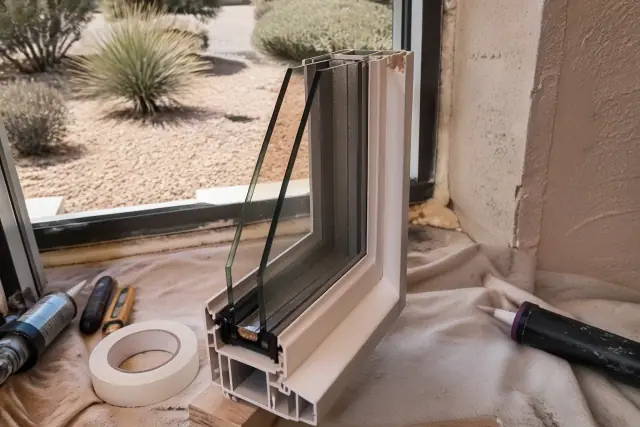
Two panes, the gas-filled space, and the Low-E layer reflecting infrared heat while visible light passes through. This makes the baseline Phoenix glass package easy to compare.
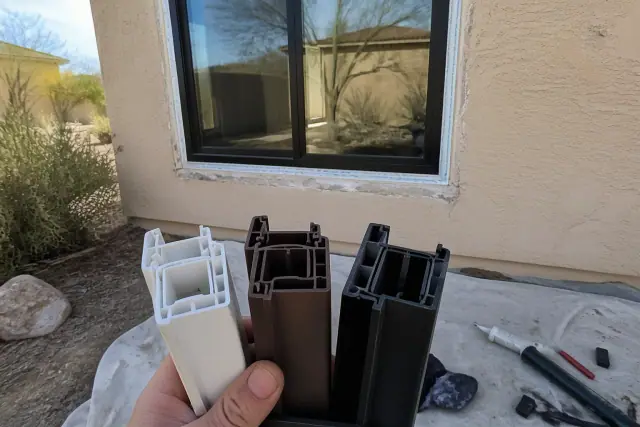
Compare how low-conductivity vinyl and fiberglass limit heat transfer against aluminum with a thermal break. The frame should support the glass package through repeated desert temperature cycling.
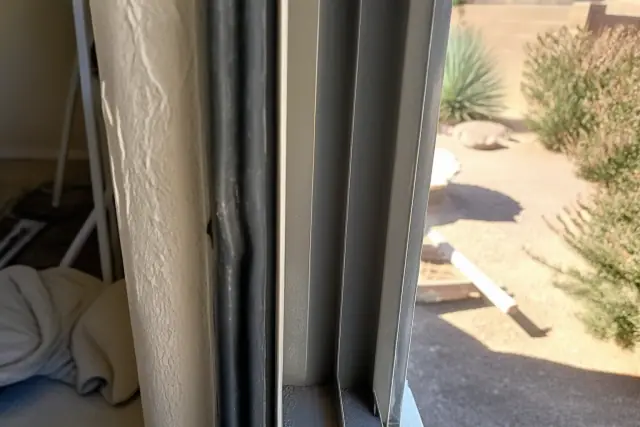
A casement sash compressing against its frame beside a sliding window track. The comparison explains why casements resist air infiltration better when weatherstripping and installation are sound.
Look for dual-pane Low-E glass with argon fill, U-values between 0.20 and 0.30, and enough visible light transmittance to keep rooms bright without excessive heat gain.
Vinyl offers low conductivity and low maintenance, fiberglass expands at a rate close to glass, and composite resists warping. Aluminum needs a thermal break to keep outdoor heat from traveling through the frame.
Picture windows seal most tightly because they do not open, while casement and awning windows use compression seals. Sliders remain practical, but worn weatherstripping along the horizontal track can allow more air leakage.
Installed replacement windows in the Phoenix metro typically range from $400 to $1,400 per window. Size, frame material, glass package, custom shapes, and structural modifications determine where a project falls within or beyond that range.
| Decision factor | Better fit for Phoenix heat | Why it matters |
|---|---|---|
| Glass package | Dual-pane Low-E glass with argon fill | Balances thermal performance and upfront cost for most homes; triple-pane is a selective upgrade. |
| Solar rating | SHGC of 0.25 or lower on south and west exposures | Limits solar heat gain where direct desert sun is strongest. |
| Frame | Vinyl, fiberglass, or aluminum with a thermal break | Reduces heat conduction and handles repeated temperature cycling. |
| Operating style | Picture or casement windows where ventilation needs allow | Fixed glazing and compression seals leak less air than a poorly maintained sliding track. |
| Installation | Flashing, insulated rough openings, and UV-rated sealant | Protects the glass package from early seal failure and air leakage. |
Single-pane glass, common in Phoenix homes built before the 1990s, provides little resistance to solar heat gain. If air conditioning runs constantly from May through September, compare the glazing and frame condition on each elevation rather than applying one replacement specification throughout the home. North-facing rooms can often use slightly higher SHGC tolerances than south- and west-facing rooms exposed to stronger direct sun.
Triple-pane adds a third glass layer and more gas-filled space, but its marginal thermal gain is smaller in a hot-dry climate than in a cold one; it makes more sense selectively for west-facing rooms or where noise reduction also matters. Bay windows use a three-panel angled form, while bow windows use four or more panels, so either style needs careful solar control when its extra glass faces strong sun. Fixed picture windows offer the tightest seal, casements and awnings combine ventilation with compression seals, and sliders trade a wider opening for more dependence on clean tracks and maintained weatherstripping. Historic openings, commercial glazing, and rooms exposed to monsoon debris may also call for custom sizing, structural calculations, or laminated impact-resistant glass.
Can existing windows be improved without full replacement? Reflective coatings or tinting can reduce some solar radiation on older single-pane units, but they do not replace insulated glazing. Fogging between panes indicates a failed seal and lost gas fill; when the frame remains sound, replacing the insulated glass unit or sash may be more economical than replacing the whole window. Drafts, difficult operation, warped frames, and persistent interior condensation are stronger reasons to evaluate full replacement before summer.
Share each room's orientation, current frame condition, operating style, and comfort problems. A window evaluation can separate glass-only failures from full-frame replacement needs and match the solar rating to each exposure.