Verify the NFRC Performance Label
Read the label for U-factor, Solar Heat Gain Coefficient, Visible Transmittance, and air leakage. These four ratings describe the whole window rather than making a glass-only performance claim.
Phoenix Window Co. recommends comparing documented energy ratings, heat-ready frame construction, the glass package, and installation quality before choosing a vinyl window. Those details matter in the Sonoran Desert, where July temperatures regularly reach 115 degrees and intense UV exposure can accelerate warping, fogging, and seal failure.
Read the label for U-factor, Solar Heat Gain Coefficient, Visible Transmittance, and air leakage. These four ratings describe the whole window rather than making a glass-only performance claim.
Fusion-welded corners form a continuous joint, while mechanically fastened corners depend on sealant that can separate during repeated thermal expansion. Reinforced meeting rails add support to wider sliders.
Match solar control, operation type, and glass safety or privacy options to the room, then decide between a retrofit insert and full-frame construction from the wall and opening condition. Proper flashing is essential for keeping air and Phoenix dust out.
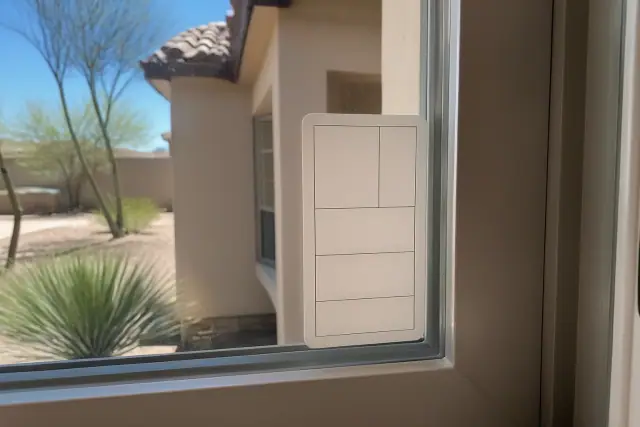
A close view of the label should identify each performance field and the certified climate region. This makes it easier to compare whole-window values on equal terms.
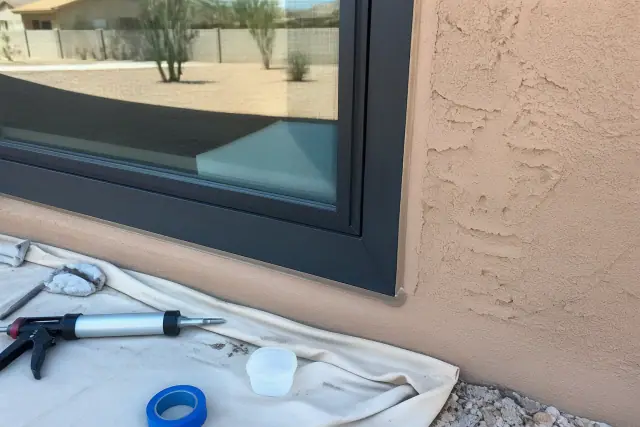
A frame cutaway should show welded corner continuity, internal chambers, and a reinforced meeting rail. Those details help distinguish a heat-ready frame from a thin, hollow extrusion.
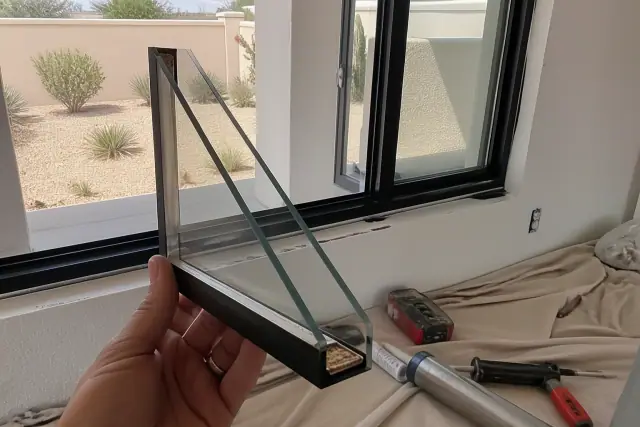
A cutaway can reveal how two or more panes, argon fill, Low-E coating, a spacer bar, and a hermetic seal work together. The warm-edge spacer deserves attention because older aluminum spacers are more prone to condensation and seal failure.
Start with the performance label and confirm that its ratings apply to the complete frame-and-glass assembly. A strong glass claim cannot compensate for a weak frame or missing whole-window data.
Room orientation, standard versus oversized openings, retrofit versus new construction, original sightlines, and HOA color requirements all affect the right configuration. West-facing rooms need more solar control, while historic homes near downtown may need custom sizing.
Seal failure, hardware wear, frame discoloration, air leakage, or visible bowing justify a closer evaluation. These symptoms can point to installation trouble or heat and UV degradation rather than routine surface dust.
Avoid thin, unreinforced frames, mechanically fastened corners, clear uncoated glass, and vague glass-only ratings. Do not overlook flashing and shimming simply because the unit carries an efficiency label.
| Feature | What to Look For | Why It Matters in Phoenix |
|---|---|---|
| Performance label | Whole-window U-factor, Solar Heat Gain Coefficient, Visible Transmittance, and air leakage | Documents thermal and air performance for a long cooling season |
| Vinyl frame | Fusion-welded corners, multi-chambered extrusions, UV stabilization, and reinforcement where needed | Helps resist separation, bowing, brittleness, and desert sun damage |
| Glass package | Low-E coating, argon fill, insulated panes, and a warm-edge spacer | Limits solar heat gain and reduces the risk of edge condensation or seal failure |
| Operation type | Sliders for simple operation, casement or awning units for a tighter compression seal | Matches ventilation and dust-control needs to the room |
| Installation | Correct opening fit, flashing, shimming, weatherstripping, and caulk | Prevents a well-rated unit from leaking air, water, or dust |
The NFRC label provides independently tested thermal and air-performance values, while Energy Star compares that data with Environmental Protection Agency climate benchmarks. Frame labels should also show testing to AAMA/WDMA/CSA 101/I.S.2/A440 for structural performance, water penetration, and air infiltration; ASTM International protocols add useful evidence for structural load, water, and forced-entry resistance.
Standard residential frames run 2.0-2.5 inches, while premium lines often reach 2.75-3.0 inches with internal reinforcement; spans over 48 inches benefit from steel or fiberglass bars. Typical U-factors are 0.30-0.35 for double-pane units and 0.20-0.25 for triple-pane units, but triple-pane glass costs 15-30% more, weighs more, and is mainly useful for west-facing rooms or busy streets. Installed awning windows typically run $750-$1,900, while bay and bow units run $3,500-$10,000+ because of their structural framing; most single-unit replacements are $300-$1,000, and projects replacing 10-25 windows may reduce per-unit labor and permitting costs. Opening size, glass package, retrofit versus full-frame work, and stucco or siding repair also change the scope.
Quality vinyl can perform well in Arizona when the compound is UV-stabilized, the corners are fusion-welded, and the frame thickness suits the opening; the drawbacks are that vinyl cannot be repainted and lower-grade material may discolor or become brittle. In Phoenix, vinyl windows generally last 20 to 30 years versus 30 to 40 years in milder climates, with seal failure, hardware wear, and discoloration serving as early replacement signs. Rinse dust from frames and tracks, lubricate hardware annually, and inspect weatherstripping and caulk each spring before monsoon season. Like-for-like replacements that leave the structural opening unchanged often do not require a City of Phoenix permit, while enlarged openings, bedroom egress changes, and commercial storefront work typically do; tempered safety glass is also required by the adopted International Residential Code near doors, stairs, and low sills.
Share the opening size, room orientation, wall condition, and performance label details. A local team can help compare replacement inserts with full-frame construction and match the glass package to a residential or commercial opening in the Salt River Valley.