Proudly serving Phoenix, Scottsdale, Mesa, Glendale, Chandler, Gilbert & surrounding areasCall or Text 24/7: 602-464-4613
Guides

How Long Do Aluminum Windows Typically Last in Phoenix?

Phoenix Window Co. explains that aluminum windows in Phoenix homes and commercial buildings typically last 20 to 30 years, while high-quality thermal-break units can reach 30 to 40 years with proper installation and maintenance. Desert heat, direct sun, monsoon dust, and the original flashing and sealing details all affect where a specific window falls within those ranges. The frame often remains structurally sound longer than its glazing seals, weatherstripping, or hardware.

Quick Summary

  • Residential aluminum windows in the Phoenix metro area typically last 20 to 30 years; maintained commercial-grade systems can reach 30 to 40 years.
  • South- and west-facing frames can exceed 150 degrees Fahrenheit, and older units may show visible seal fatigue within 12 to 18 years rather than 20-plus years in milder climates.
  • Thermal breaks, correct shimming and flashing, durable finishes, and a U-factor of 0.40 or lower help a window perform through 100-plus-degree summers.
  • Condensation between panes, difficult operation, pitting, oxidation, or rising cooling costs are stronger replacement signals than age alone.

What Determines Aluminum Window Lifespan?

Typical Phoenix Lifespan

The usual 20-to-30-year residential range is a starting point, not an automatic replacement date. Some 20-year-old frames still operate smoothly, while 15-year-old units can already be failing after poor installation or the use of builder-grade materials.

Heat, Materials, and Installation

Frame gauge, alloy grade, thermal-break construction, glazing seals, finish quality, and installation all influence service life. Missing shims, flashing, or sealant at the rough opening can cause failure well before the frame reaches its expected age.

Inspect Seals and Operation

Check for trapped condensation, stiff sashes, worn rollers, loose locks, pitting, and white oxidation. Cleaning slider tracks, lubricating hardware annually, and resealing glazing before failure can slow avoidable wear.

What Aging Aluminum Windows Reveal

Condensation Between Double Panes

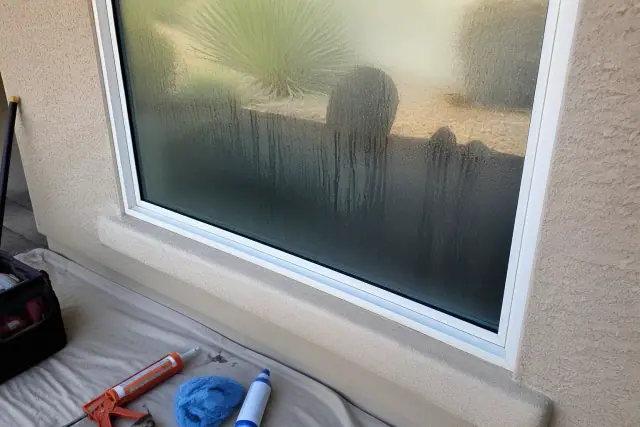
Condensation and moisture trapped between double pane window glass on a jobsite in Phoenix, AZ.

Moisture trapped inside an insulated glass unit rather than surface moisture. This distinction helps identify a failed glazing seal even when the aluminum frame remains usable.

Thermal Break Inside an Aluminum Frame

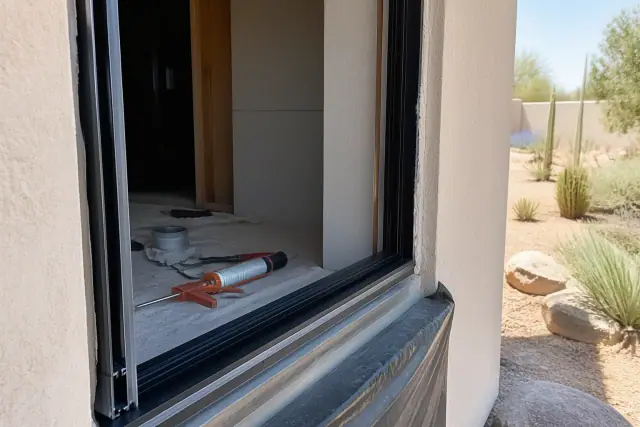
Thermal break inside an aluminum window frame on a Phoenix, AZ jobsite with tools and desert landscaping in the background.

A cutaway with a polyurethane or polyamide barrier separating the interior and exterior aluminum surfaces. The barrier reduces conductive heat transfer compared with older single-wall frames.

Dust-Worn Slider Track and Rollers

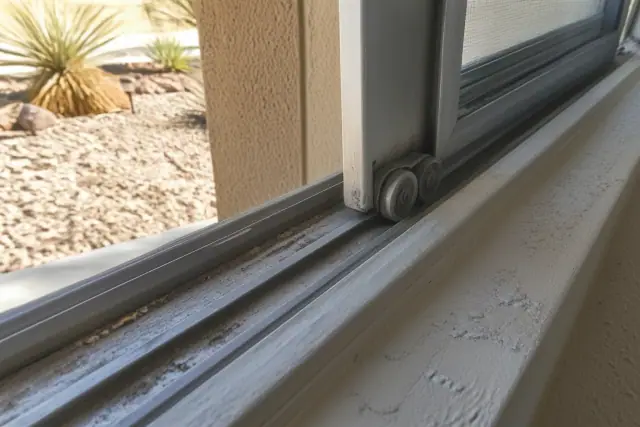
Dust-worn sliding window track and rollers being cleaned and lubricated at a home in Phoenix, AZ.

Monsoon grit collected in a sliding window track beside worn rollers. This visual explains why sliders may need moving-part repairs before the frame itself needs replacement.

Aluminum Window Life at a Glance

Typical Residential Range

Most residential aluminum windows in the Phoenix metro area need attention somewhere within 20 to 30 years, depending on installation, exposure, and upkeep.

Older Seal-Fatigue Range

Older single-glazed or double-pane aluminum units may show visible seal fatigue within 12 to 18 years in Phoenix, compared with 20-plus years in milder regions.

Repair Can Add Service Life

Replacing hardware, weatherstripping, or glazing seals can often extend a sound aluminum unit's service life another 5 to 10 years.

Ideal High-Grade Range

Under ideal conditions, high-grade thermal-break windows can approach 40 to 50 years, particularly in commercial applications with scheduled upkeep.

Aluminum Window Lifespan Comparison

Phoenix Aluminum Window Lifespan Ranges

Window ProfileService RangeTypical Limiting Factor
Older single-glazed or double-pane aluminum12 to 18 years before visible seal fatigueGlazing seals under desert thermal cycling
Typical residential aluminum20 to 30 yearsSeal, weatherstripping, and hardware condition
High-quality thermal-break or commercial-grade system30 to 40 years with maintenanceInstallation quality and scheduled component care
High-grade commercial system under ideal conditionsCan approach 40 to 50 yearsGlazing and moving parts usually age before the frame

What the Age Range Means

Age should prompt an inspection, not an automatic replacement. Many 20-year-old aluminum windows in Arcadia, Encanto, and Ahwatukee can remain serviceable when their seals are intact and their sashes move and lock correctly. Single-pane frames installed before the 2000s may still be structurally sound but lack the thermal performance of current dual-pane, low-E glazing. Replacement becomes more practical when the frame has structural corrosion, the thermal break has degraded, or recurring failures are raising cooling demand.

Factors That Change the Answer

Phoenix sits in the Salt River Valley within Maricopa County, where intense UV exposure, daily thermal cycling, and monsoon grit stress different parts of a window assembly. Anodized or powder-coated frames tested to AAMA 2603, 2604, or 2605 standards resist color loss and pitting longer than mill-finish aluminum. NFRC-rated thermal-break units meeting ENERGY STAR Southwest criteria, typically with a U-factor of 0.40 or lower and a low solar heat gain coefficient, reduce conductive and radiant heat. Frame gauge and alloy, glazing quality, accurate custom fabrication, proper shimming and flashing, and annual hardware care all help determine whether the window reaches the upper end of its range.

Common Follow-Up Questions

Can a 20-year-old aluminum window still be good? Yes, if the glazing seal is intact, the frame is not corroded, and the sash operates smoothly. Can one last 50 years? A high-grade unit can approach that age under ideal conditions, especially with commercial maintenance, but seals, gaskets, and glazing usually set the practical limit. When is replacement easier to schedule in Phoenix? Late fall through winter, roughly October through February, typically brings better availability and avoids opening the building during 110-plus-degree days. What can replacement cost? The source research places national aluminum-window pricing from about $200 on the low end to $1,500 or more per window, depending on size, glazing, and whether the unit is standard or custom.
Ask a Local Window Pro

Need Help Assessing Your Windows?

Share the window's approximate age, orientation, operating problems, and any condensation or frame damage you can see. An inspection can separate repairable hardware or seal issues from conditions that make full replacement the more practical option.